Printed in large, easy-to-read type with full-color photos of every plant and remedy
From the Old Herb Shops of Asia to Your Kitchen
Remedies from China, Japan, Korea, Thailand, Vietnam, Indonesia, Malaysia and the Philippines
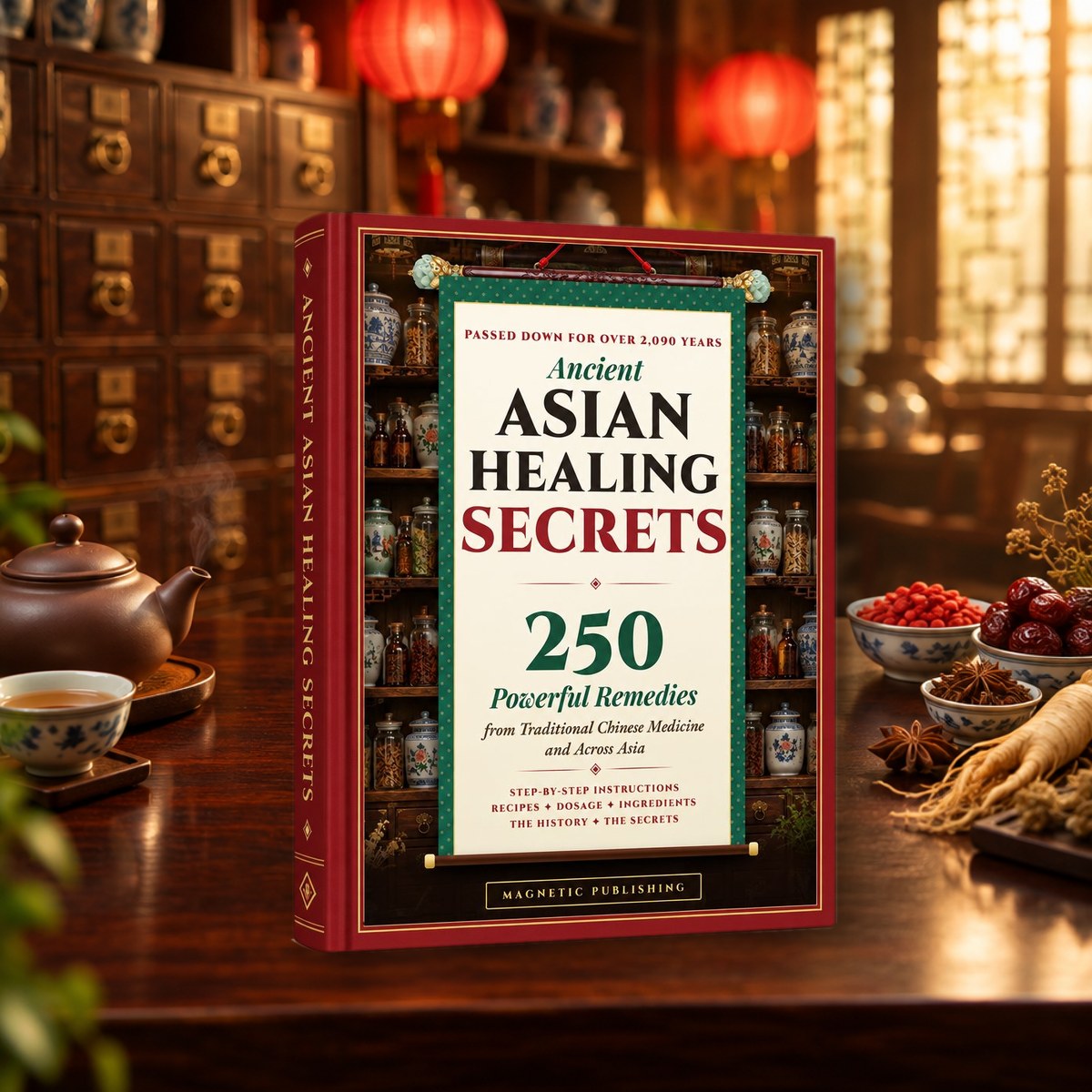
Ancient Asian Healing Secrets
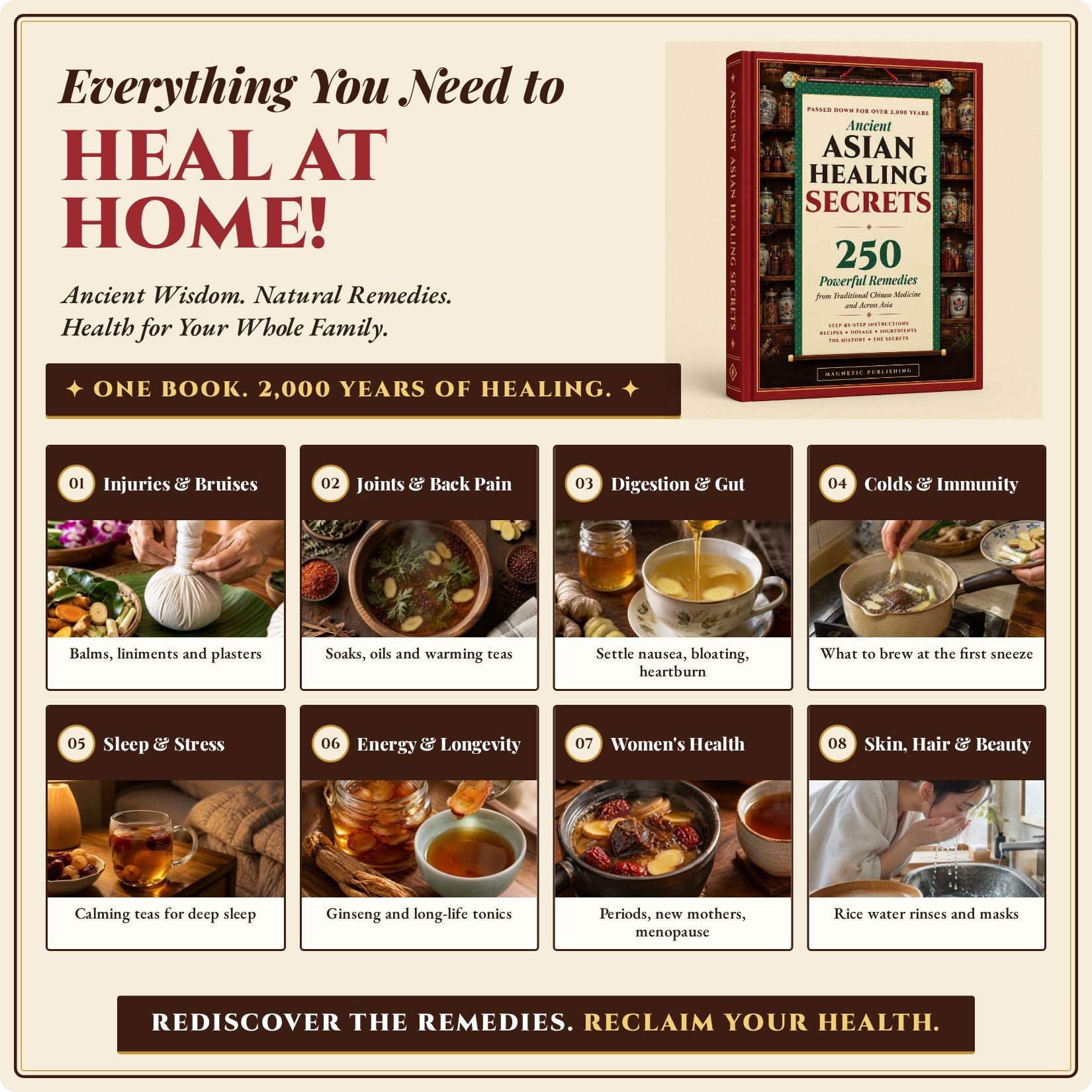
Across China, Japan, Korea, Thailand, Vietnam, Indonesia, Malaysia and the Philippines, families healed themselves for thousands of years with what grew around them: a slice of ginger, a pot of herbs, a jar of honey, a few red dates.
Much of that know-how lived in grandmothers’ kitchens and old herb shops, and much of it is being lost. This book gathers 250 of those remedies and shows you exactly how to make each one at home.
They Just Don’t Make Books Like This Anymore
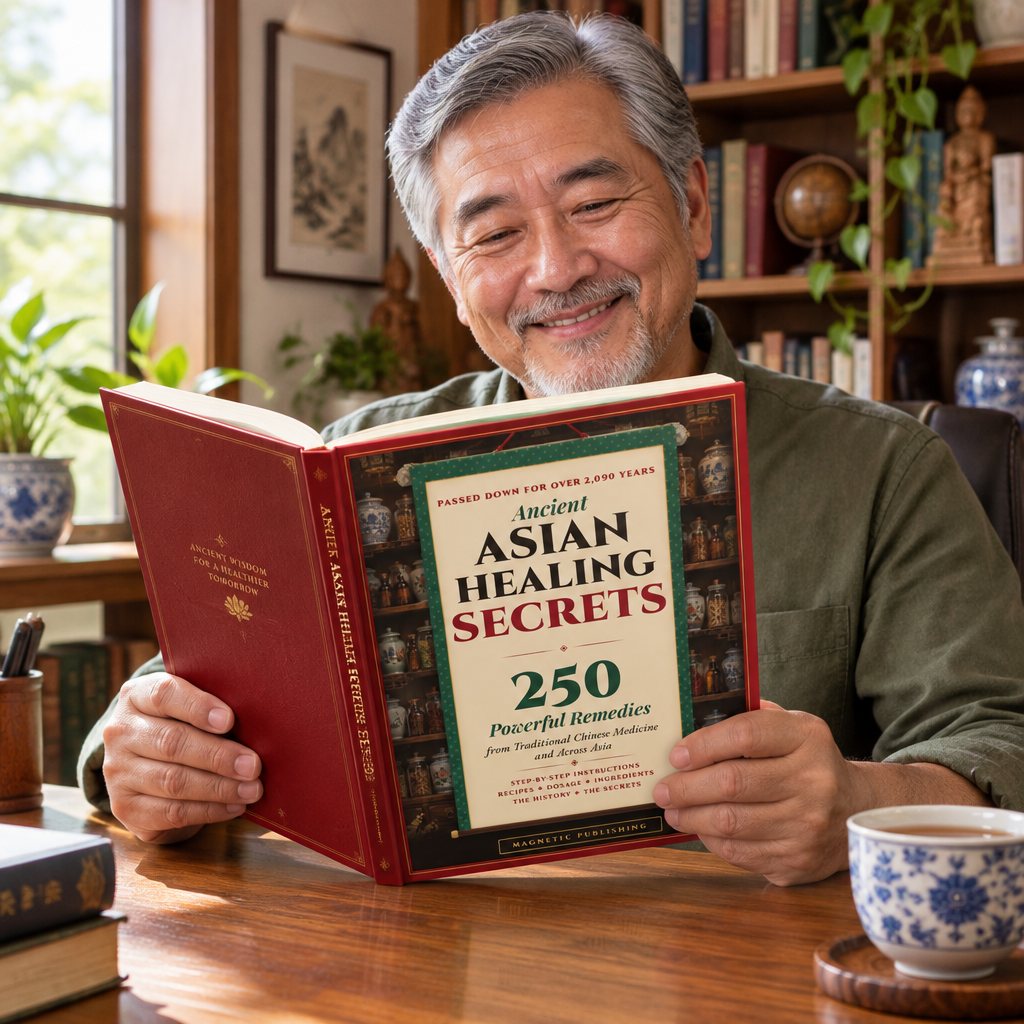
This is a book you keep on the kitchen counter, not on a shelf. Open it with your morning tea, read one remedy, and make it that day.
Every remedy uses ingredients you can find at an Asian market or online, and every page tells you how much, how often, and when to see a doctor instead.
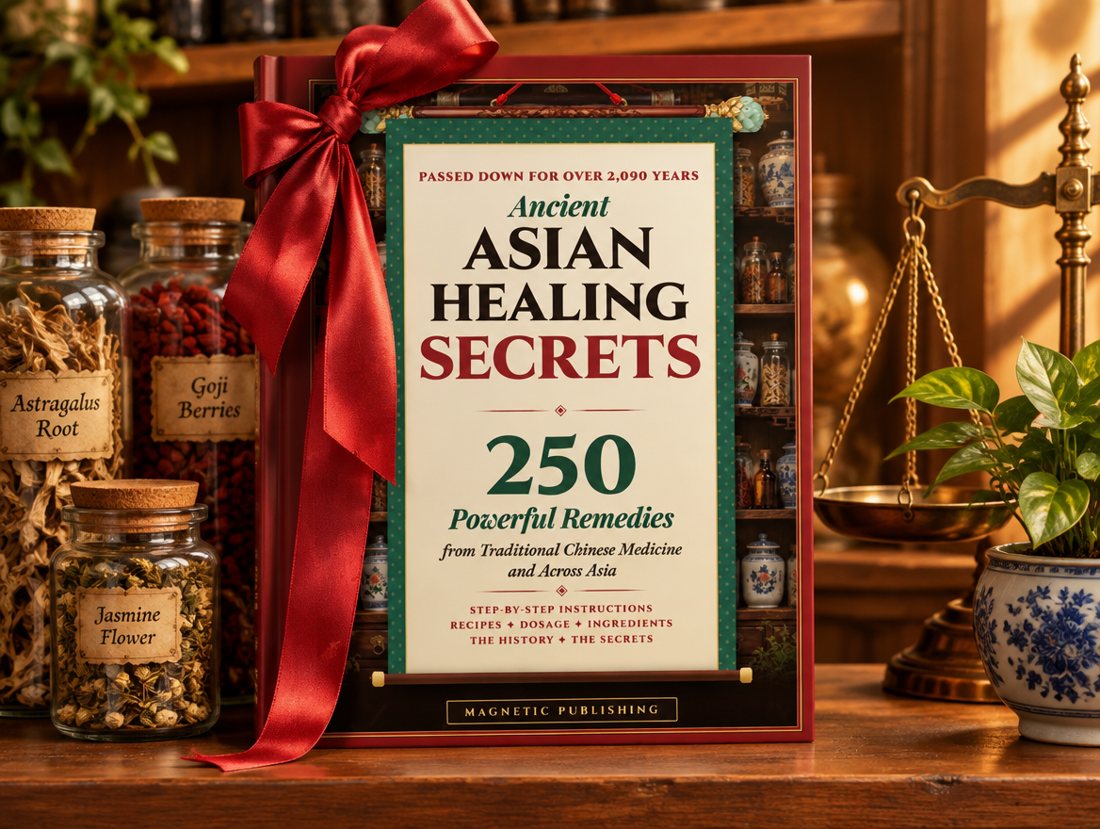
It also makes a great gift, especially between parents and children. When you give it, you pass down remedies that would otherwise be forgotten. What better gift than your family’s health?
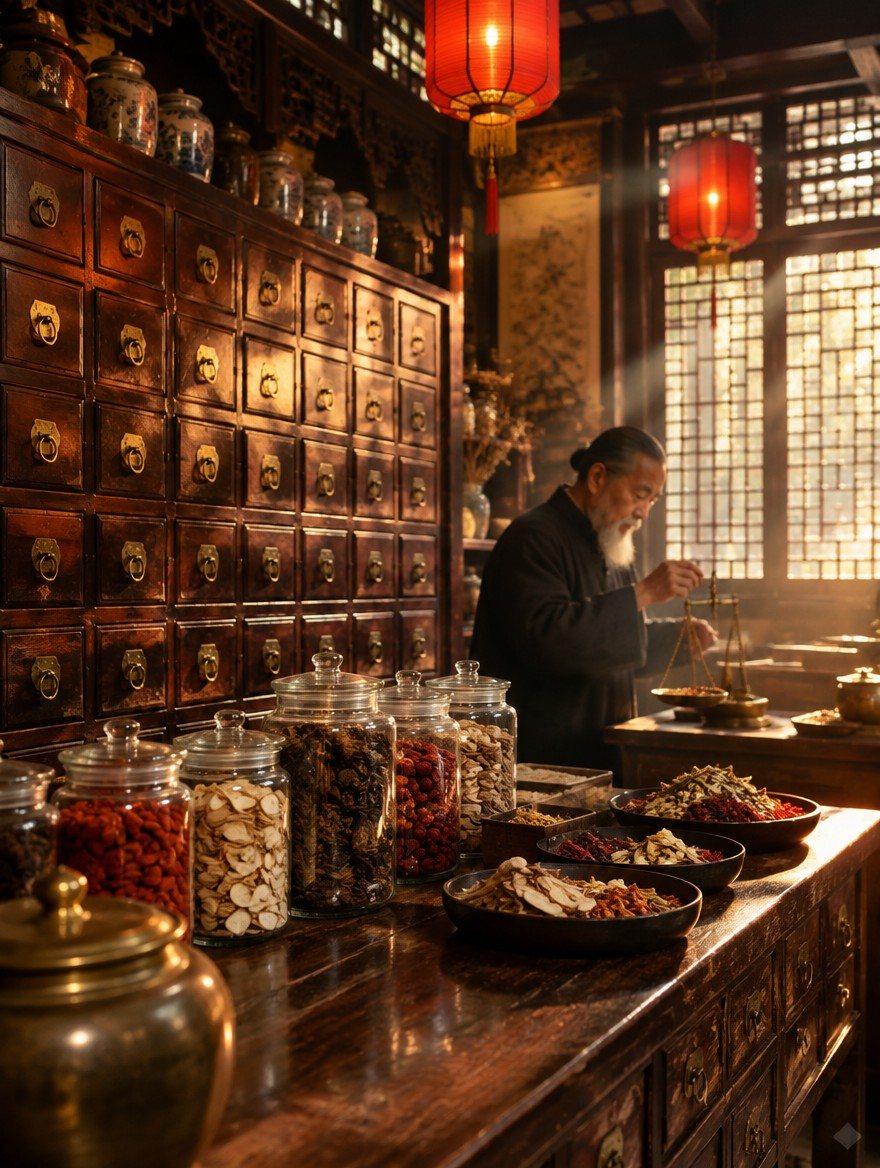
Your New Asian Apothecary
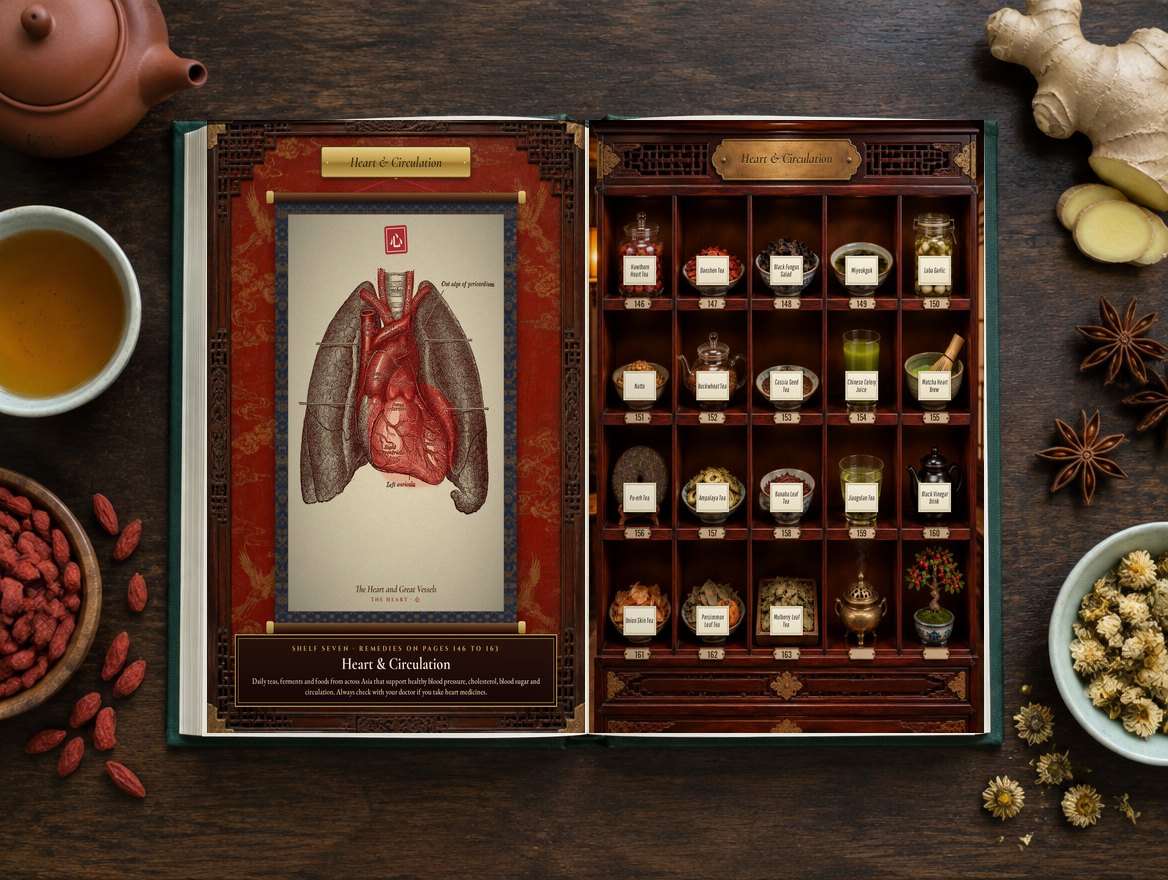
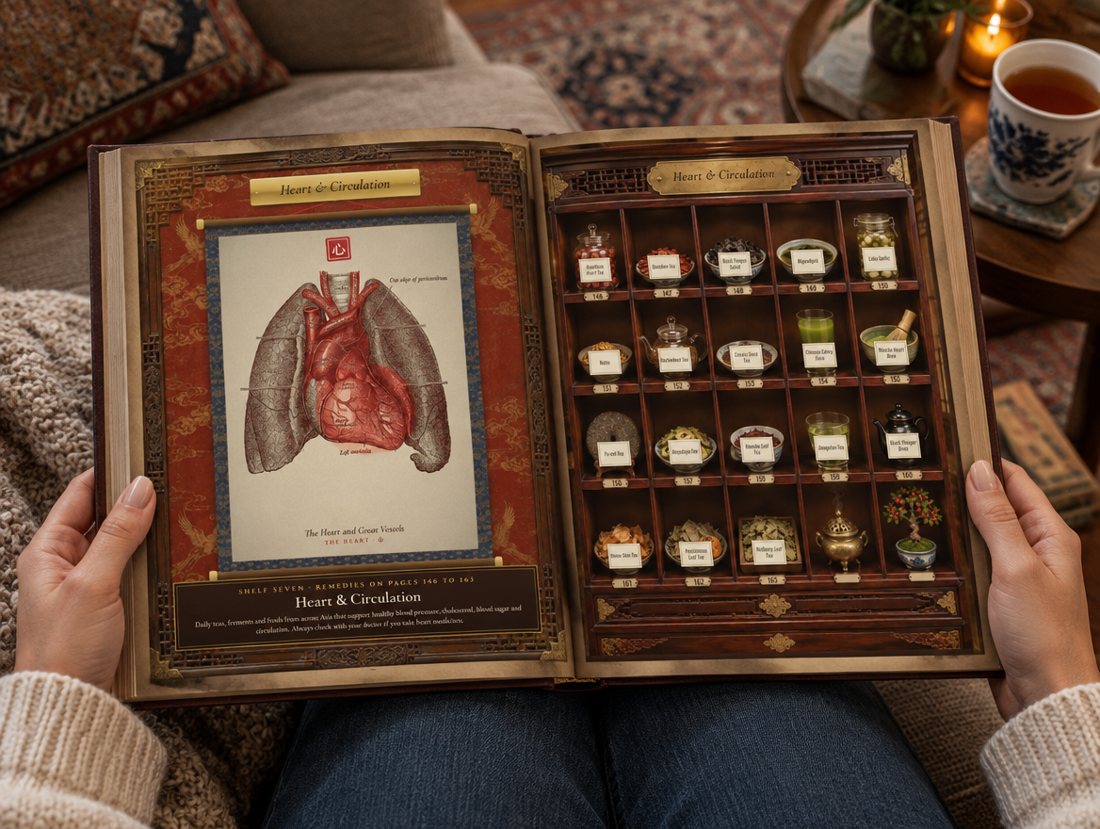
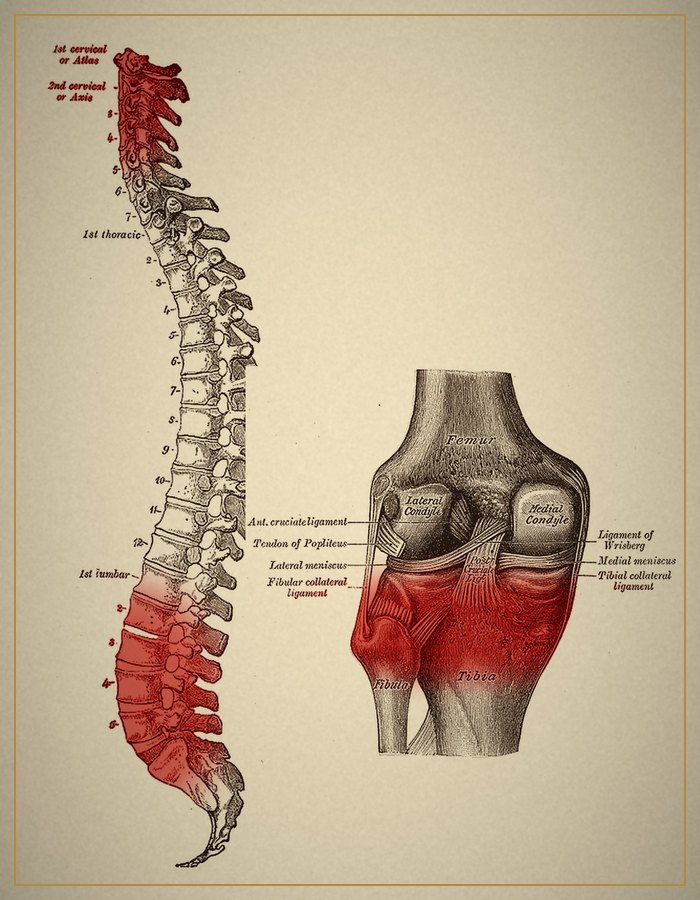
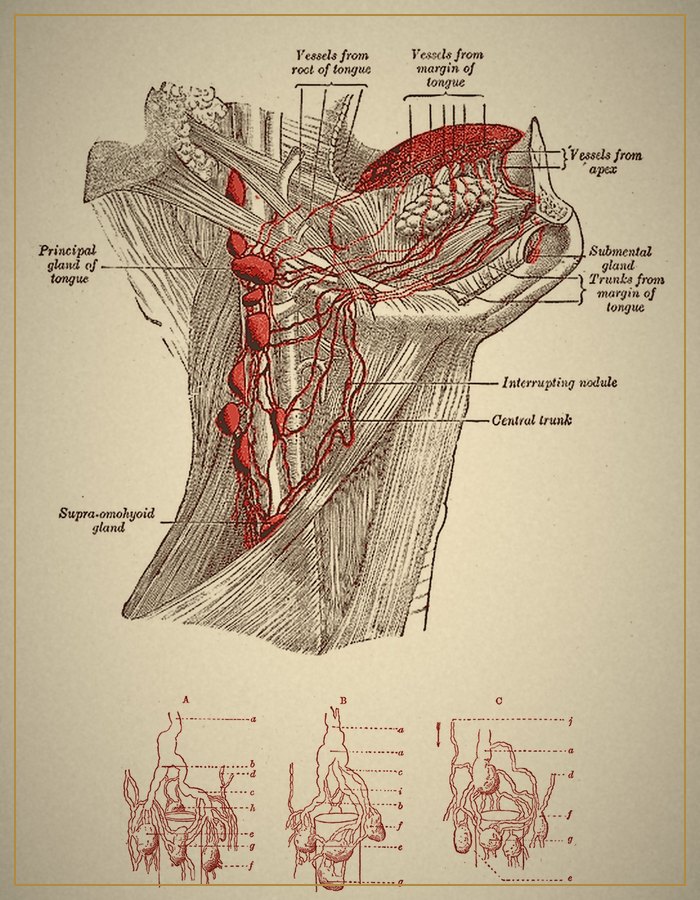
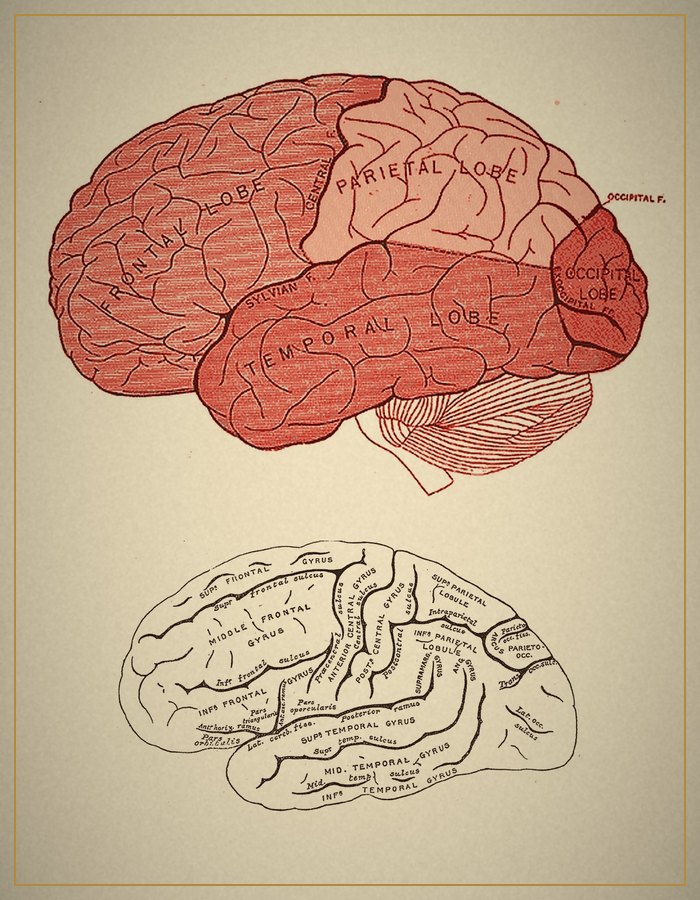
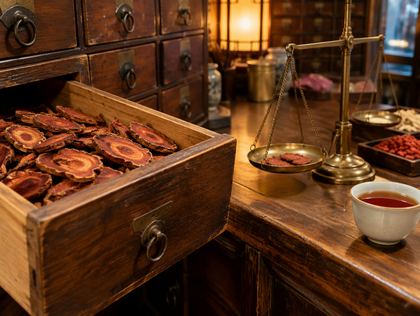
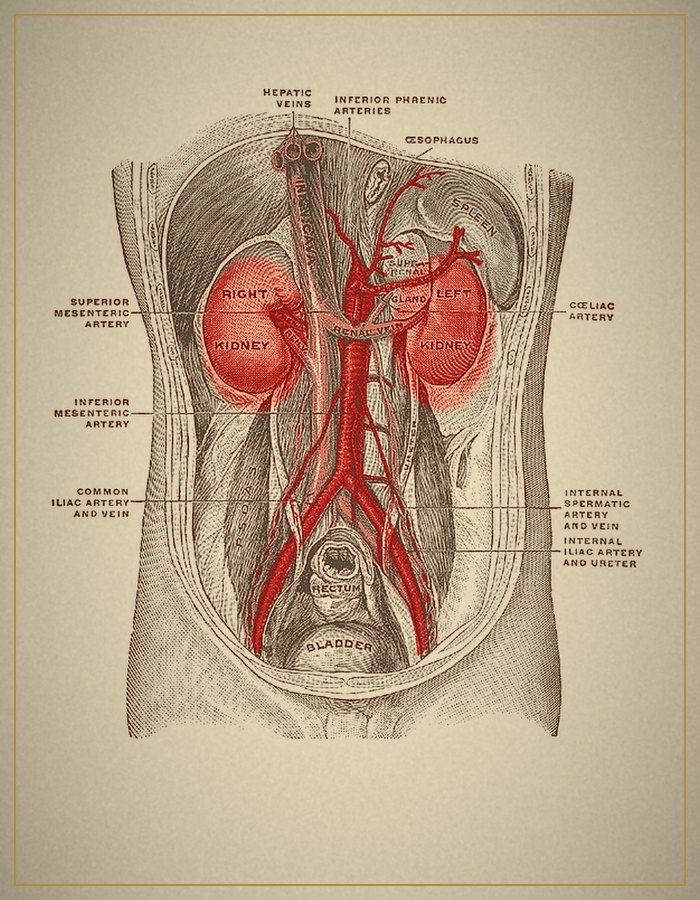
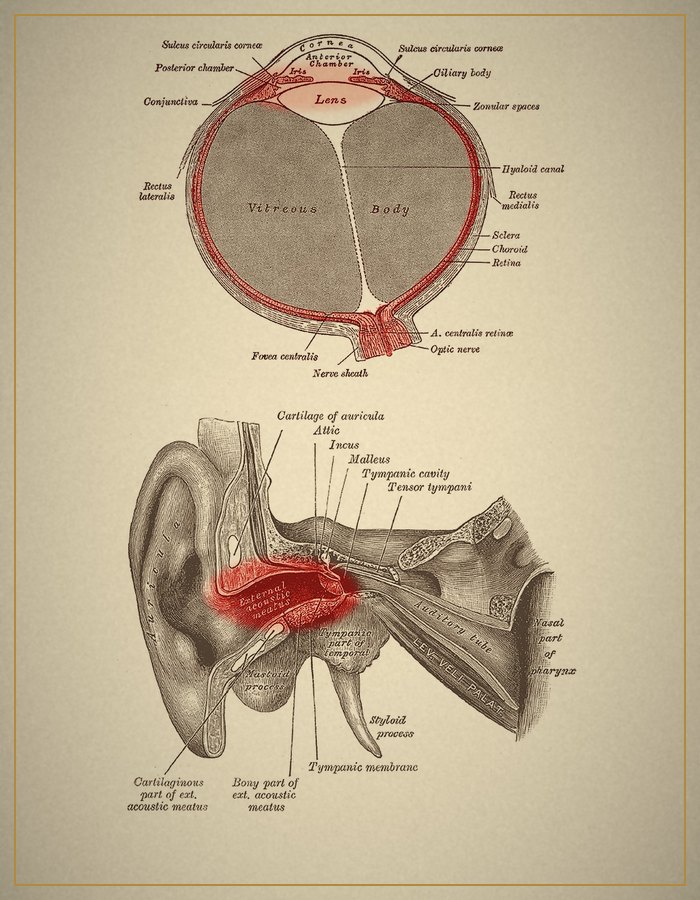
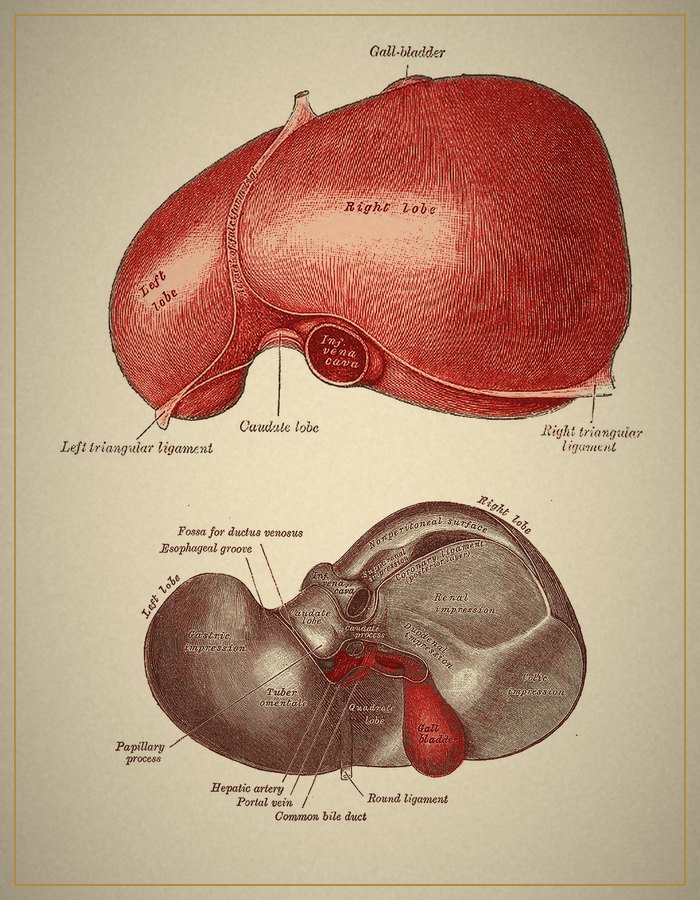
Unlike other remedy books, this one is very easy to use. The book is organized like an old Chinese herb shop: 13 “shelves,” one for each part of the body. Each shelf opens with an antique anatomy plate showing exactly where the remedies work, and a herb cabinet showing every remedy on that shelf with its page number.
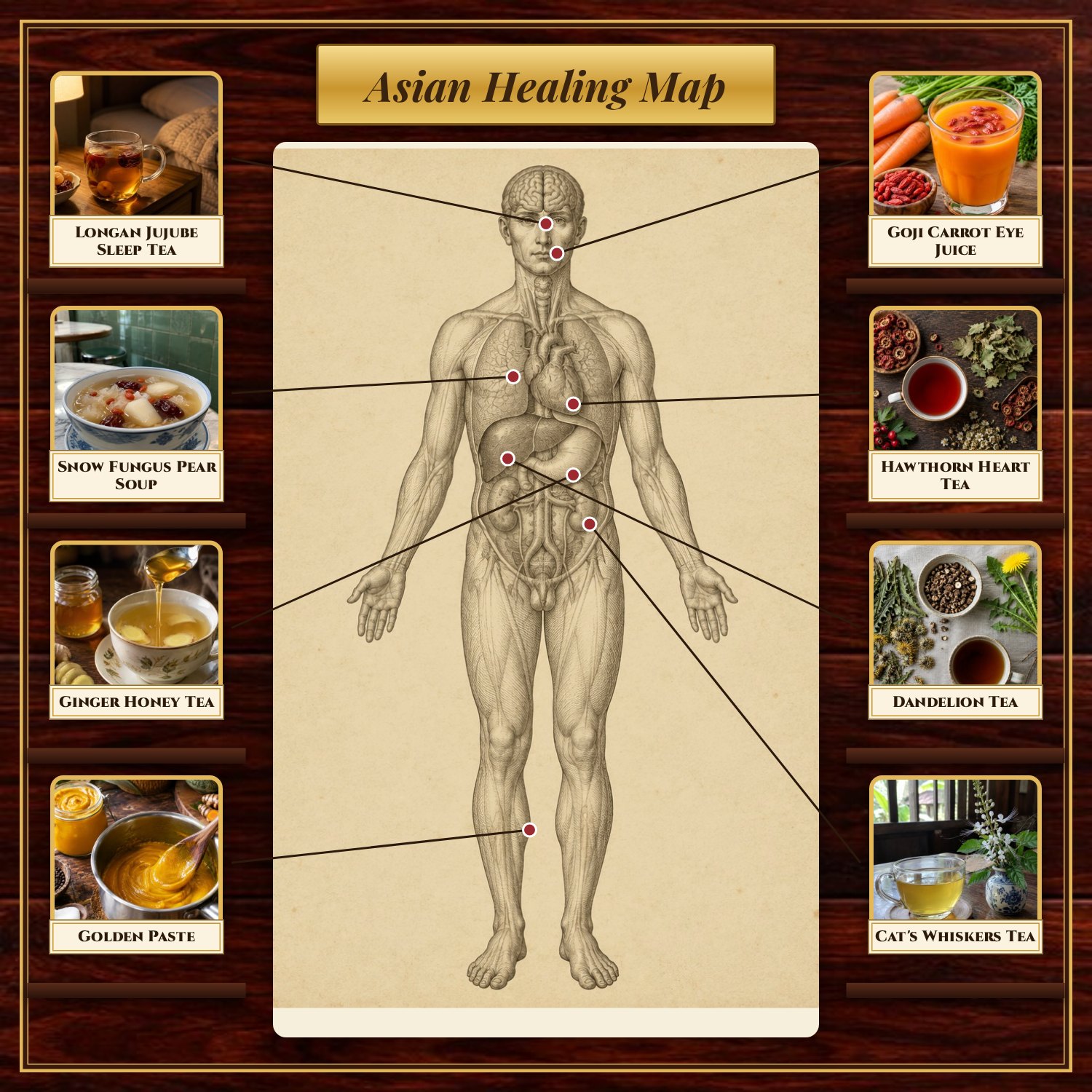
Can’t sleep? Point to the head on the healing map, turn to Shelf Six, and pick a remedy. Or look up “sleep” in the symptom index at the back. Either way, you are at the right remedy in under a minute.
For Each Remedy You’ll Find
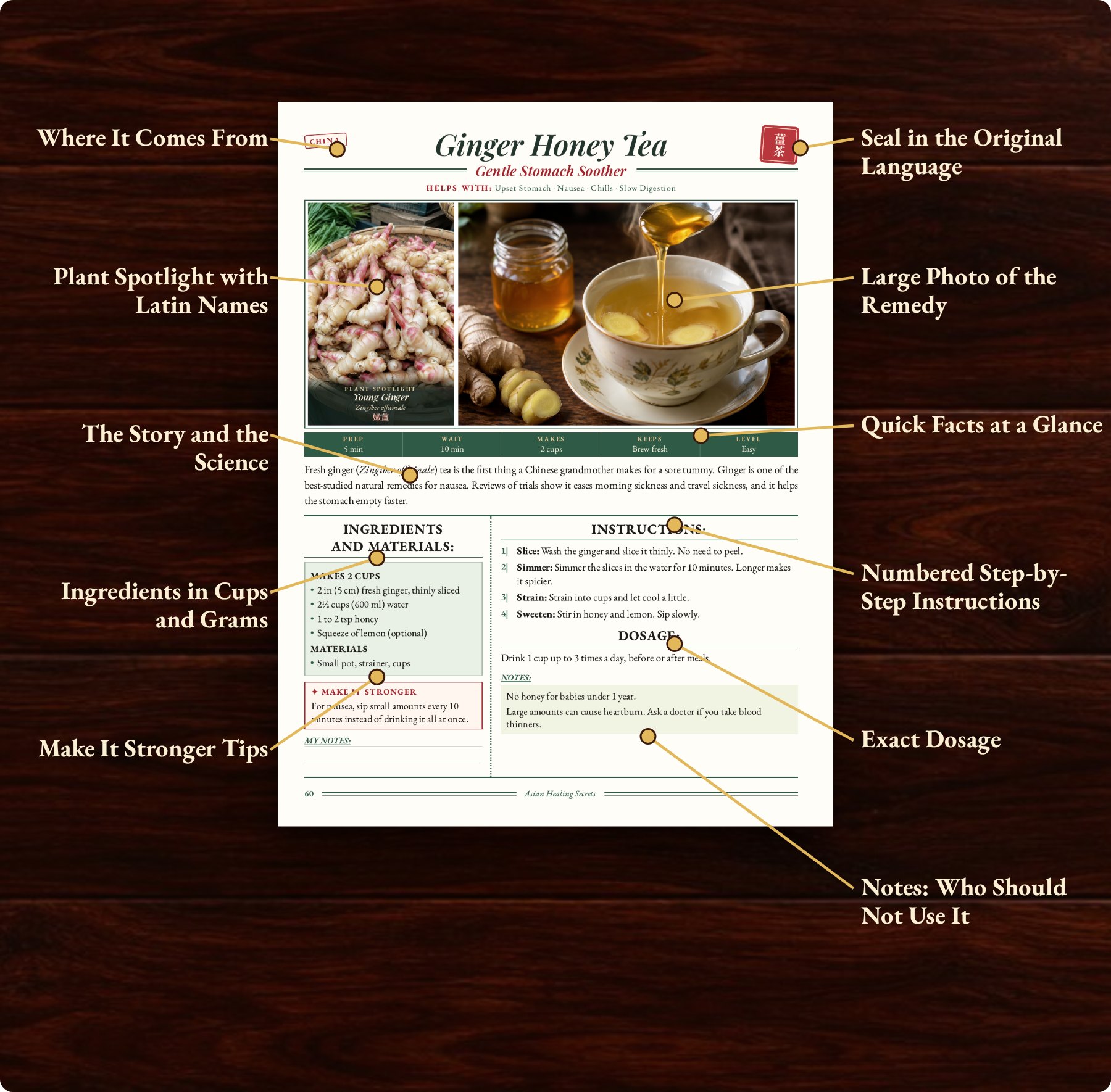
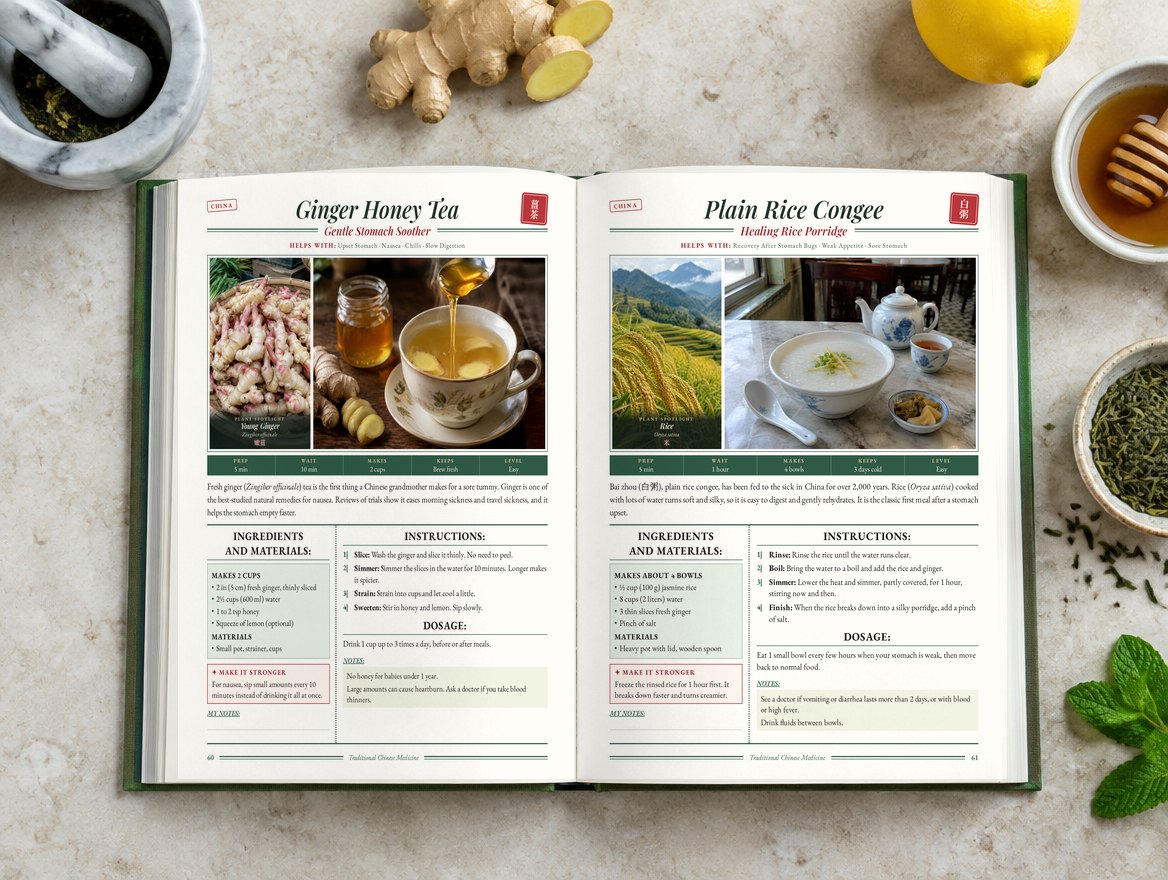
Step-by-step instructions and full-color photos that guide you from start to finish. A photo of the living plant, with its Latin and local names, and a photo of the finished remedy.
You also get the exact ingredients in cups and grams, the dosage, a tip to make it stronger, and a Notes box that tells you who should not use it and when to see a doctor.
Here Are Some of the Remedies You Will Find Inside
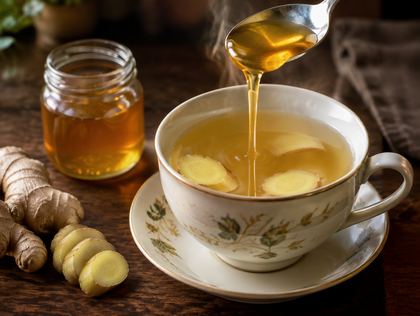
The 2-Ingredient Tea That Settles Nausea Fast
Chinese grandmothers make this for upset stomachs, morning sickness and long car rides. Fresh ginger and honey, ready in 10 minutes. Reviews of trials show ginger eases nausea, which is why it is the first thing many families reach for.
Remedy no. 41 of 250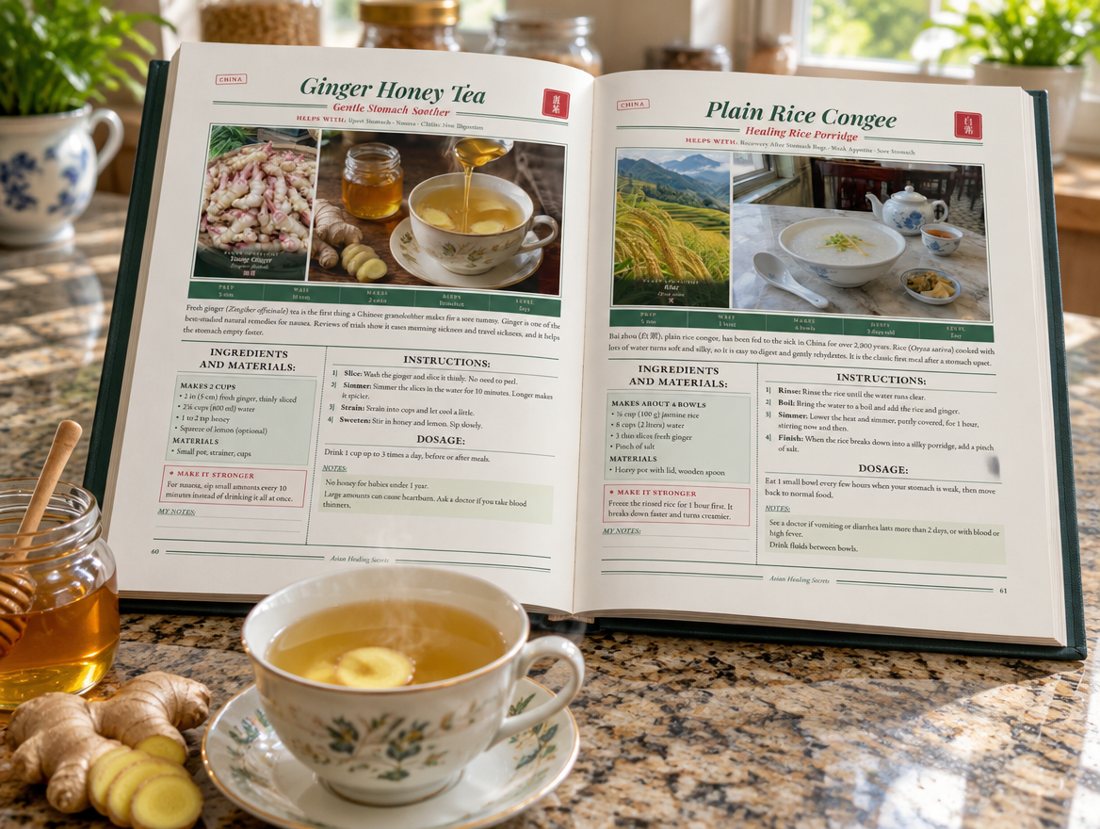
The Golden Flower Tea for Tired Eyes and Tension Headaches
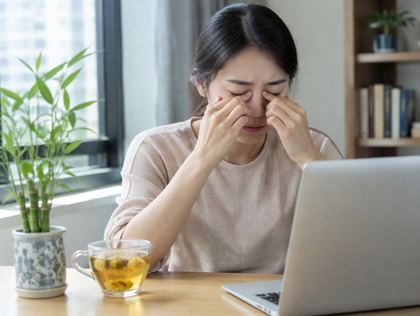
Chrysanthemum and goji berries have been steeped together in China for centuries to soothe screen-tired eyes and a tight, tense head. Brew it in the afternoon instead of another coffee.
Remedy no. 103 of 250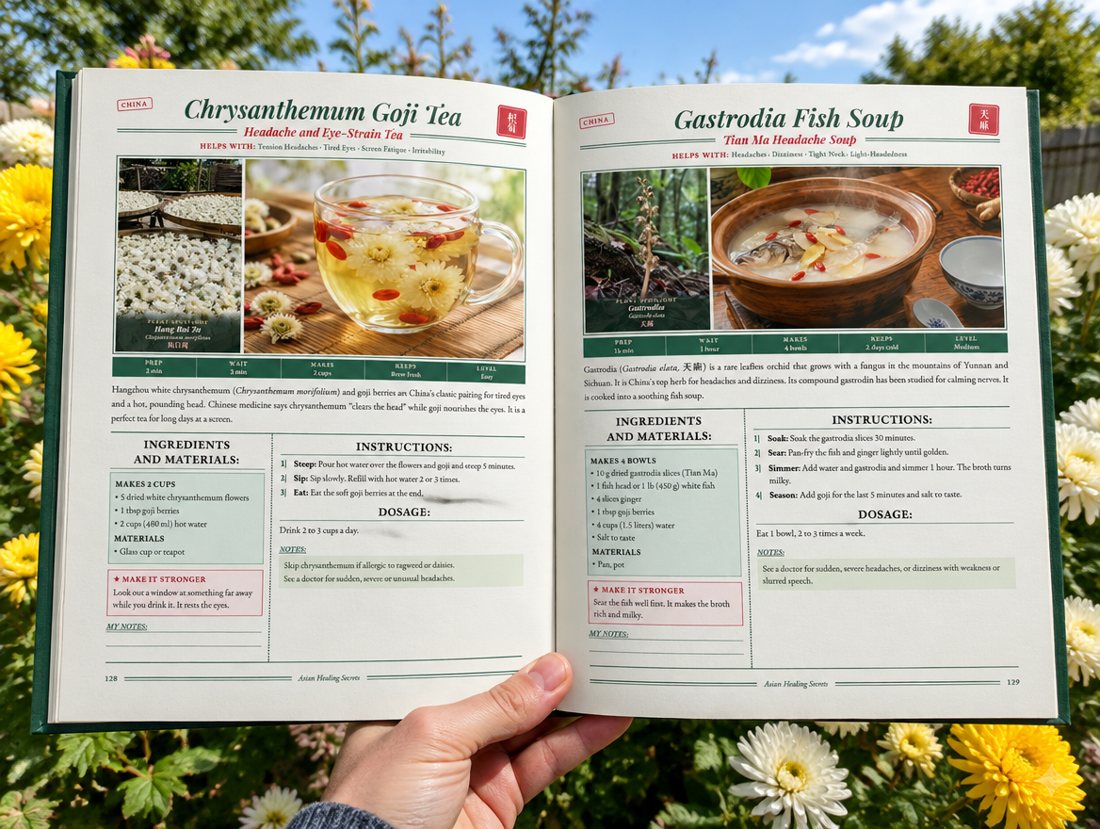
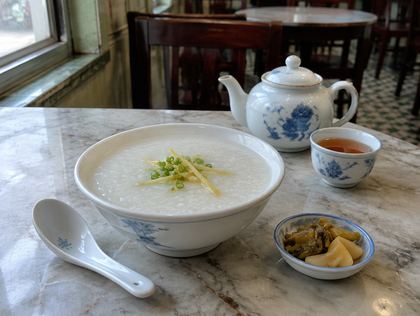
The Bowl Every Asian Mother Makes After a Stomach Bug
Plain rice congee is the first food served to the sick across Asia. It is gentle, warm and easy to digest, and the book shows the right water ratio and how to make it in under an hour.
Remedy no. 42 of 250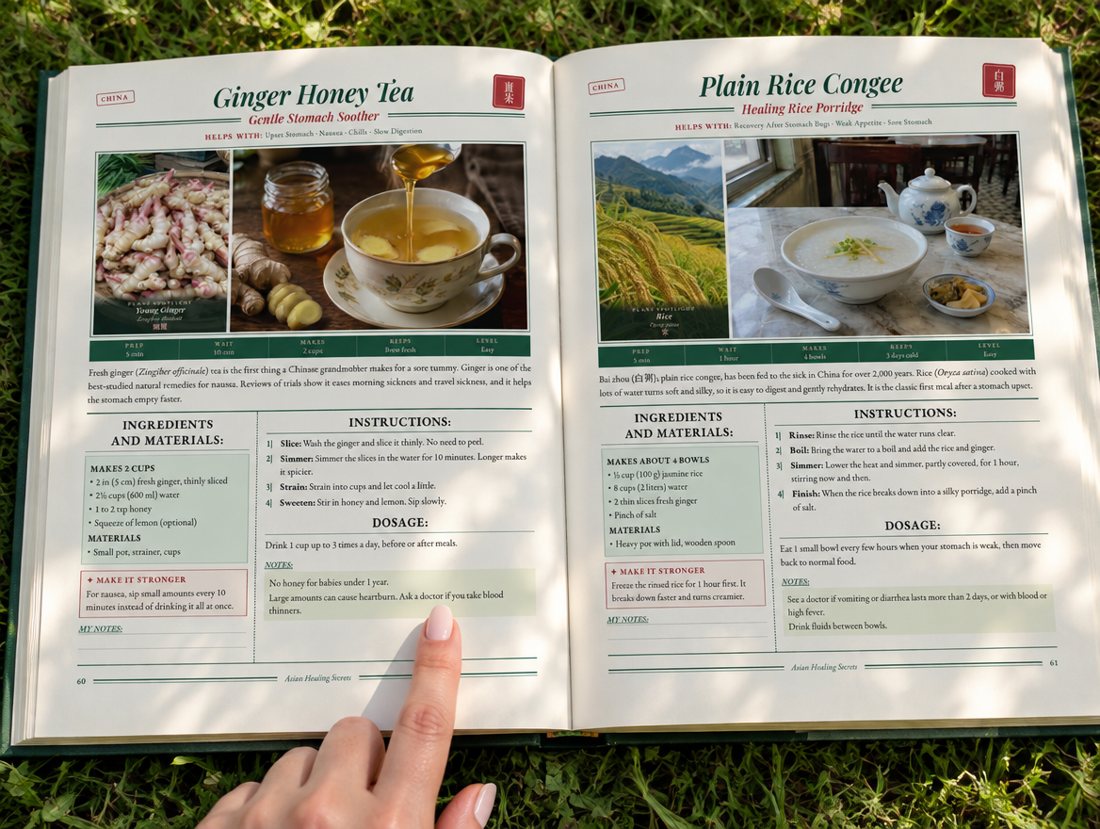
Follow Along, One Numbered Step at a Time
Every remedy is laid out the same way, so once you have made one, you can make them all. Steps are numbered, amounts are exact, and every page has room for your own notes.
Click on the Body System Below to Find the Remedy You Need
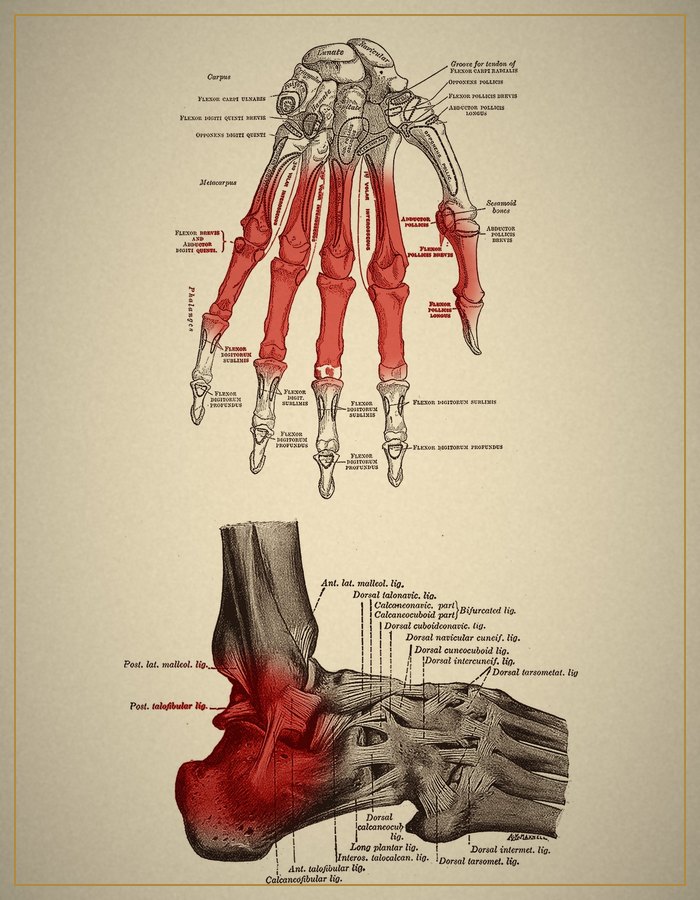
Injuries, Bruises & Martial Arts
Liniments, balms and plasters kung fu masters and village healers use for bruises, sprains and cuts.
Here are some of the remedies you will find on this shelf:
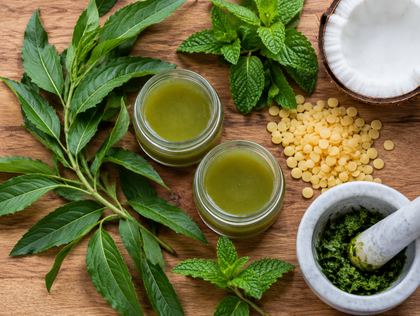
- Thai Green Balm – Insect Bites, Itchy Rashes, Small Aches, Heat Rash P. 25
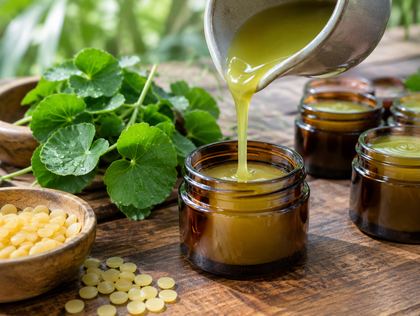
- Gotu Kola Salve – Healing Scrapes, Scars, Stretch Marks, Dry, Cracked Skin P. 26
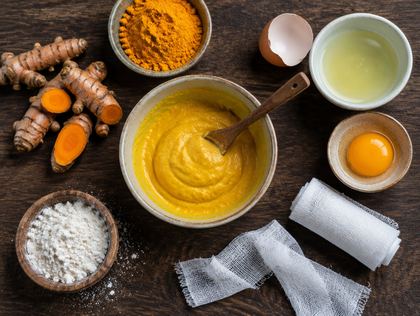
- Turmeric Sprain Wrap – Twisted Ankles, Sore Wrists, Swelling, Bruising P. 27
- Hot Salt Ginger Pack – Back Pain, Stiff Shoulders, Cold Belly, Period Cramps P. 28
- Honey Turmeric Salve – Scrapes, Grazes, Small Burns, Dry Cracked Skin P. 29
- Iron Palm Liniment – Sore Hands After Training, Stiff Knuckles, Bruised Palms P. 30
Joints, Back & Muscle Pain
Soaks, oils and teas for stiff joints, sore backs, cramps and tired muscles.
Here are some of the remedies you will find on this shelf:
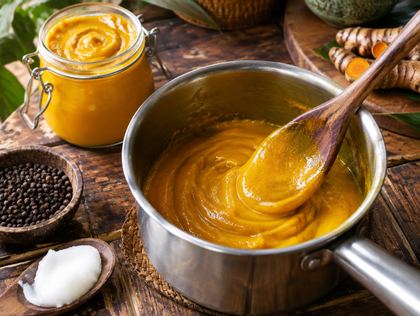
- Golden Paste – Joint Stiffness, Achy Knees, Daily Inflammation P. 38
- Eucommia Back Tea – Weak Lower Back, Tired Knees, Aging Joints P. 39
- Kudzu Neck Tea – Stiff Neck, Tight Shoulders, Tension Headaches P. 40
- Five-Herb Joint Soak – Stiff Hands, Aching Feet, Cold Joints, Morning Stiffness P. 41
- Lemongrass Muscle Oil – Sore Muscles, Tired Legs, Tension, Stiff Back P. 42
- Thai Herbal Bath – Body Aches, Tired Muscles, Stress, After Long Travel P. 43
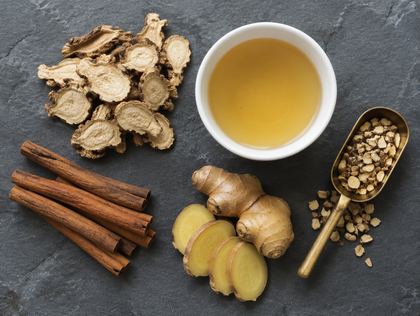
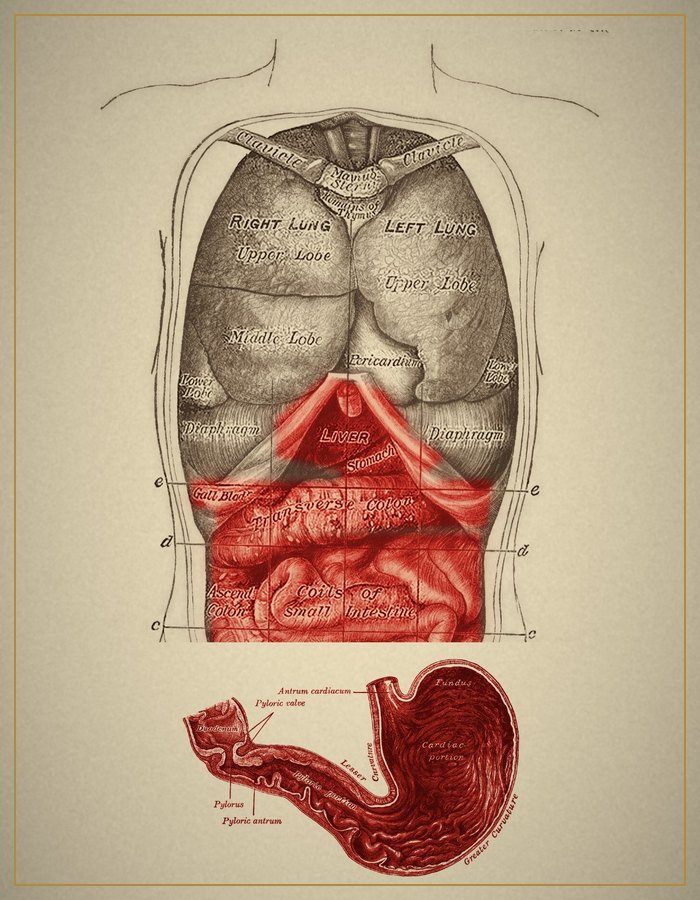
The Digestive System
Teas, congees and ferments for bloating, nausea, heartburn and a happy gut.
Here are some of the remedies you will find on this shelf:
- Ginger Honey Tea – Upset Stomach, Nausea, Chills, Slow Digestion P. 60
- Plain Rice Congee – Recovery After Stomach Bugs, Weak Appetite, Sore Stomach P. 61
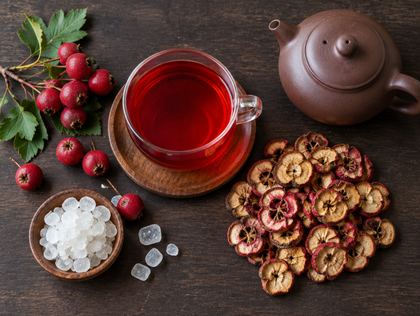
- Hawthorn Digestive Tea – Heavy, Greasy Meals, Bloating, Fullness P. 62
- Tangerine Peel Tea – Bloating, Gas, Poor Appetite, Nausea P. 63
- Lemongrass Ginger Tea – Nausea, Motion Sickness, Upset Stomach, Bloating P. 64
- Temulawak Digestive Jamu – Poor Appetite, Slow Digestion, Bloating, Liver Support P. 65
Immune System & Colds
What Asian families reach for at the first sneeze, sore throat or fever.
Here are some of the remedies you will find on this shelf:
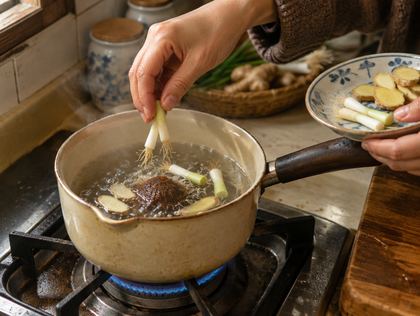
- Ginger Scallion Tea – First Signs of a Cold, Chills, Body Aches, Stuffy Nose P. 82
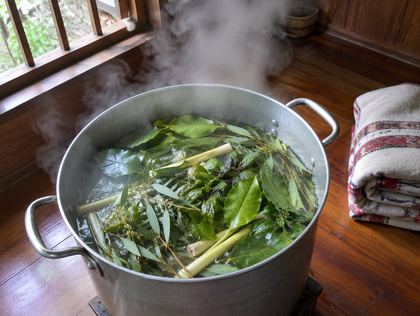
- Vietnamese Herbal Steam – Stuffy Head, Chills, Body Aches, Early Colds P. 83
- Salabat – Sore Throat, Colds, Chills, Upset Stomach P. 84
- Astragalus Chicken Soup – Recovering After Illness, Catching Colds Often, Tiredness P. 85
- Fermented Garlic Honey – Cold Season Support, Sore Throat, Coughs P. 86
- Jade Screen Tea – Catching Colds Often, Sweating Easily, Low Energy P. 87
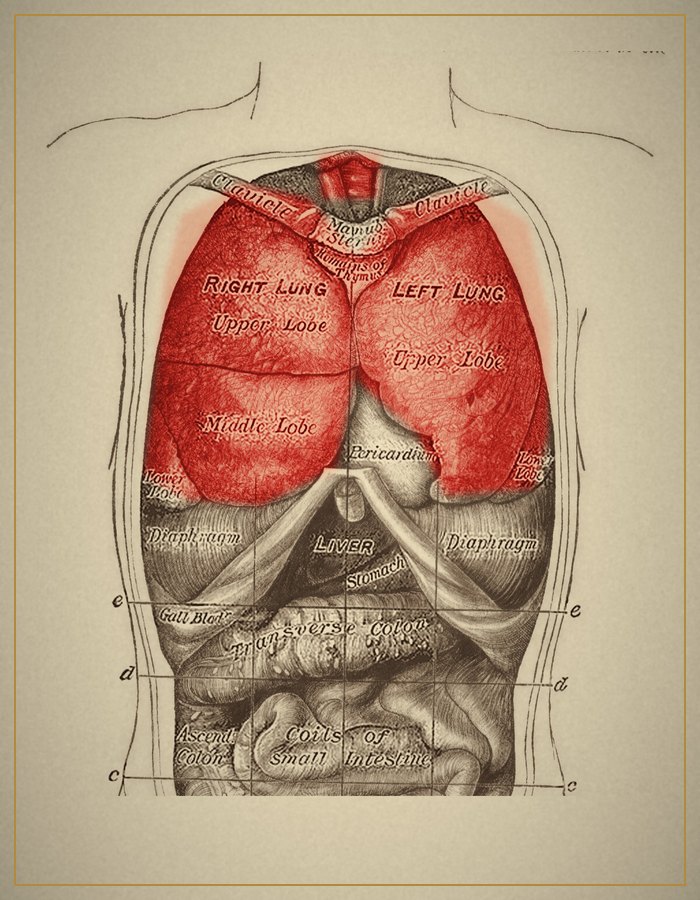
The Respiratory System
Pear soups, syrups and steams for coughs, sinus and dry lungs.
Here are some of the remedies you will find on this shelf:
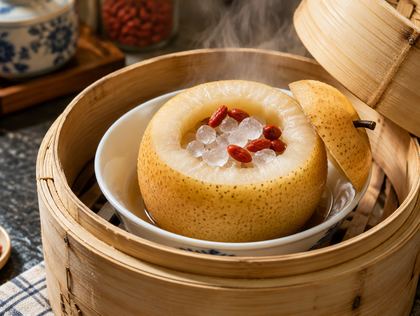
- Steamed Pear – Dry Cough, Scratchy Throat, Dry Air, Hoarse Voice P. 104
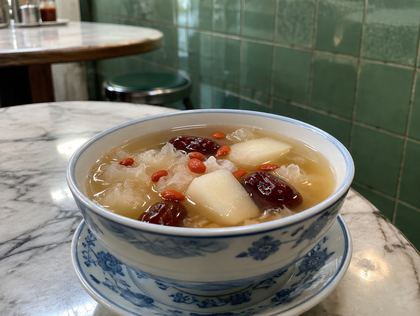
- Snow Fungus Pear Soup – Dry Throat, Dry Skin, Dry Cough, Hot, Dry Weather P. 105
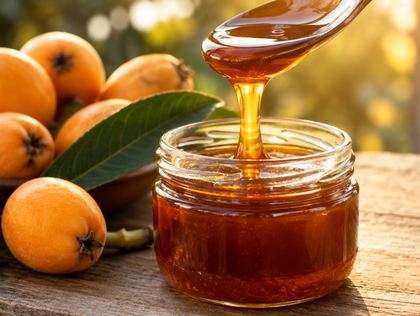
- Loquat Syrup – Coughs, Sore Throat, Hoarse Voice P. 106
- Monk Fruit Tea – Sore, Hoarse Throat, Dry Cough, Lost Voice P. 107
- Oregano Leaf Syrup – Coughs, Phlegm, Sore Throat, Children's Colds P. 108
- Lagundi Syrup – Coughs, Mild Asthma Symptoms, Phlegm P. 109
Sleep, Stress & Mind
Calming teas and bedtime rituals for deep sleep and a quiet mind.
Here are some of the remedies you will find on this shelf:
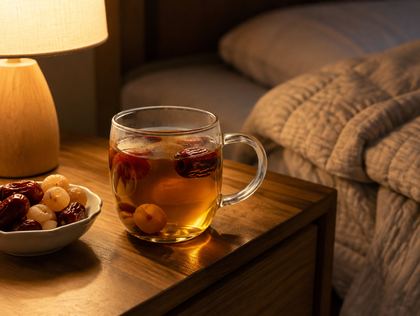
- Longan Jujube Sleep Tea – Trouble Falling Asleep, Worry, Tiredness, Pale, Tired Look P. 124
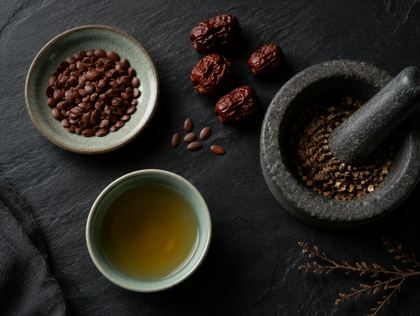
- Sour Jujube Seed Tea – Waking at Night, Light Sleep, Restless Mind, Night Sweats P. 125
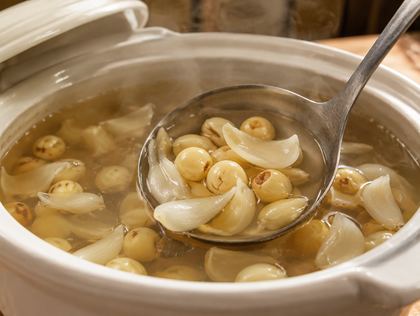
- Lily Bulb Lotus Seed Soup – Restless Mind, Worry, Irritability, Dry Mouth P. 126
- Lotus Leaf Tea – Restlessness, Hot Nights, Light Sleep, Heavy Meals P. 127
- Chrysanthemum Goji Tea – Tension Headaches, Tired Eyes, Screen Fatigue, Irritability P. 128
- Gastrodia Fish Soup – Headaches, Dizziness, Tight Neck, Light-Headedness P. 129
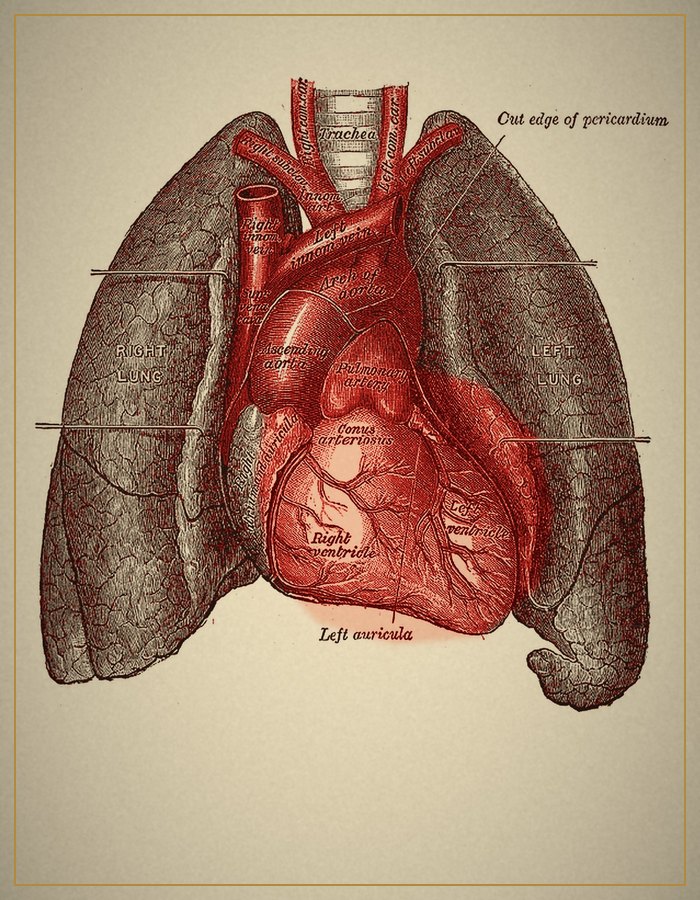
Heart & Circulation
Daily teas and foods that support blood pressure, cholesterol and circulation.
Here are some of the remedies you will find on this shelf:
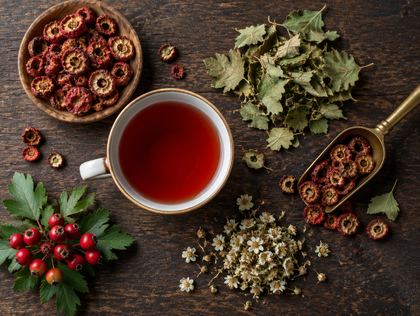
- Hawthorn Heart Tea – Heart Support, Healthy Blood Pressure, Cholesterol, Circulation P. 146
- Danshen Tea – Circulation, Heart Health, Cold, Achy Limbs P. 147
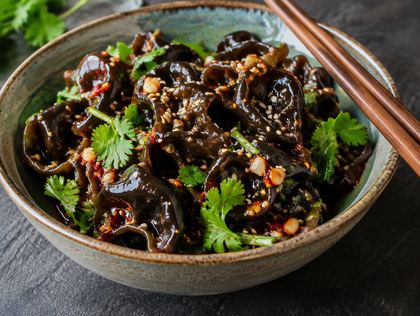
- Black Fungus Salad – Healthy Blood Flow, Cholesterol, Fiber P. 148
- Miyeokguk – Healthy Blood Pressure, Recovery, Minerals P. 149
- Laba Garlic – Heart Health, Cholesterol, Blood Pressure P. 150
- Natto – Healthy Blood Flow, Bone Strength, Gut Health P. 151
Energy, Qi & Longevity
Ginseng, tonics and the everyday foods of the world’s longest-lived people.
Here are some of the remedies you will find on this shelf:
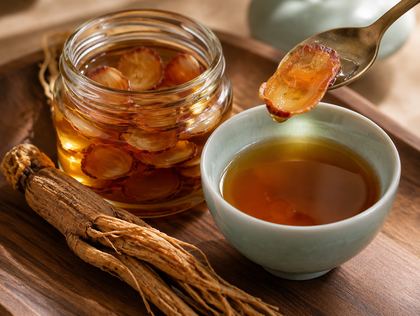
- Korean Red Ginseng Tea – Fatigue, Low Stamina, Brain Fog, Recovery P. 166
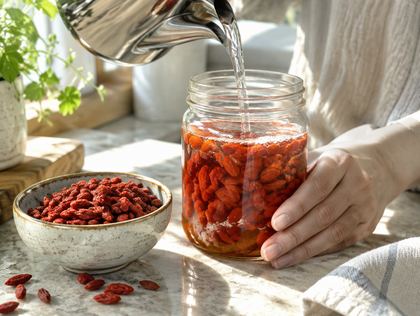
- Goji Morning Tonic – Tired Eyes, Low Energy, Aging Well, Immune Support P. 167
- Omija Cold Brew – Fatigue, Stress, Sweating Easily, Focus P. 168
- Cordyceps Chicken Soup – Stamina, Low Energy, Breathing Strength, Recovery P. 169
- Black Sesame Soup – Graying Hair, Dry Skin, Low Energy, Constipation P. 170
- Eight Treasure Congee – Energy, Steady Fuel, Weak Digestion, Winter Warmth P. 171
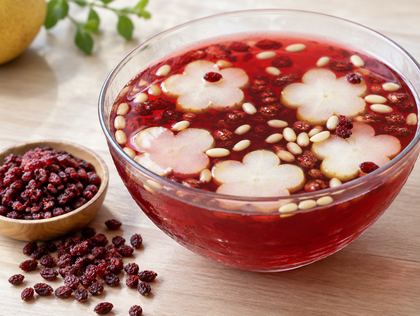
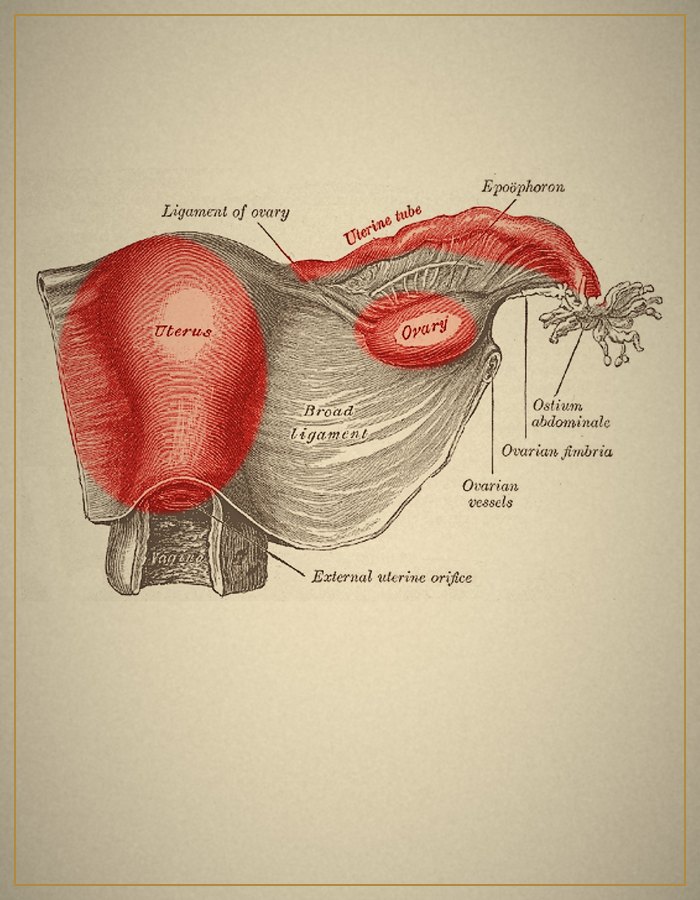
Women’s Health
For periods, pregnancy, new mothers and menopause.
Here are some of the remedies you will find on this shelf:
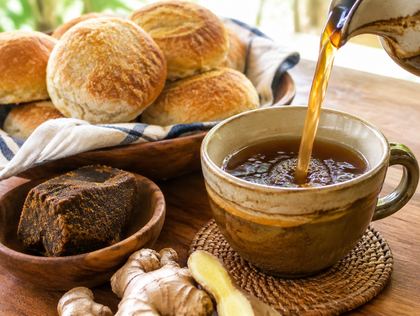
- Brown Sugar Ginger Tea – Period Cramps, Cold Belly, Tiredness During Periods P. 188
- Four Things Soup – Tiredness After Periods, Pale Skin, Light, Late Periods P. 189
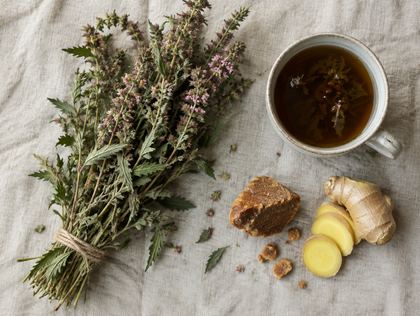
- Motherwort Tea – Period Cramps, Clots, Irregular Periods P. 190
- Jamu Kunyit Asam – Period Cramps, Bloating, Feeling Run Down P. 191
- Sesame Oil Chicken – Postpartum Recovery, Warmth, Strength P. 192
- Papaya Fish Soup – Breast Milk Supply, Postpartum Nourishment P. 193
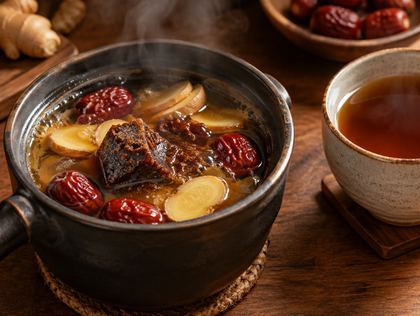
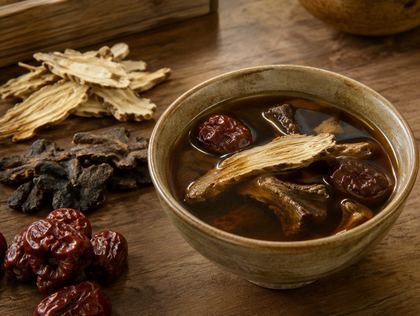
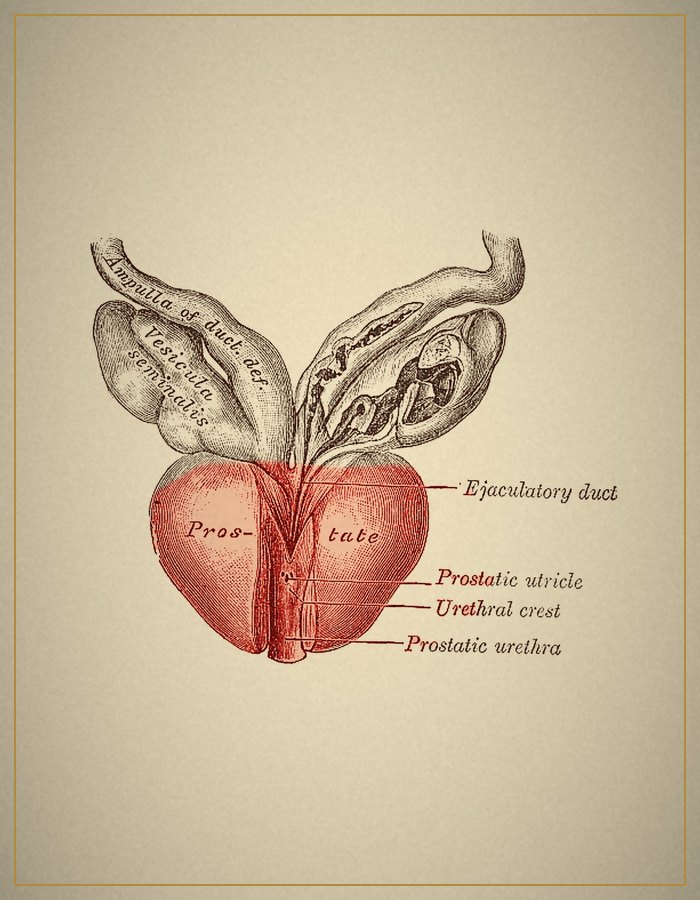
Men’s Vitality
For stamina, prostate health, fertility and strong knees.
Here are some of the remedies you will find on this shelf:
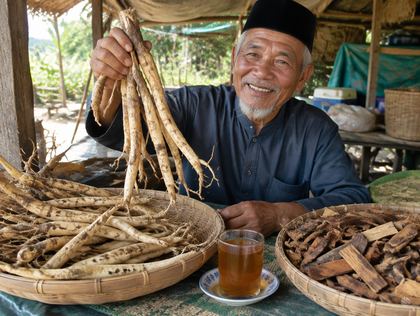
- Tongkat Ali Tea – Low Energy, Stress, Men's Vitality, Stamina P. 210
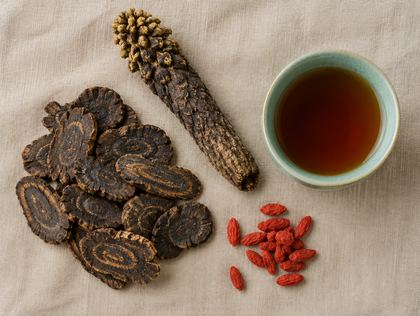
- Cistanche Tea – Tiredness, Cold Lower Back, Low Drive, Dry Constipation P. 211
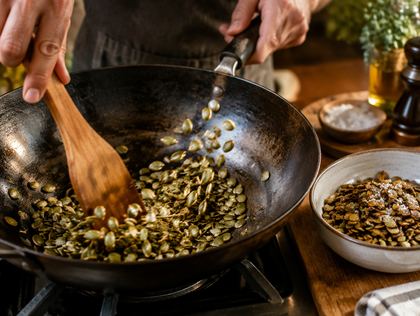
- Roasted Pumpkin Seeds – Prostate Health, Night-Time Urination, Zinc P. 212
- Epimedium Tea – Low Drive, Cold Hands and Feet, Weak Lower Back P. 213
- Five Seeds Tea – Men's Fertility, Low Energy, Frequent Urination P. 214
- Ginger Scallion Oysters – Zinc, Men's Vitality, Immune Strength P. 215
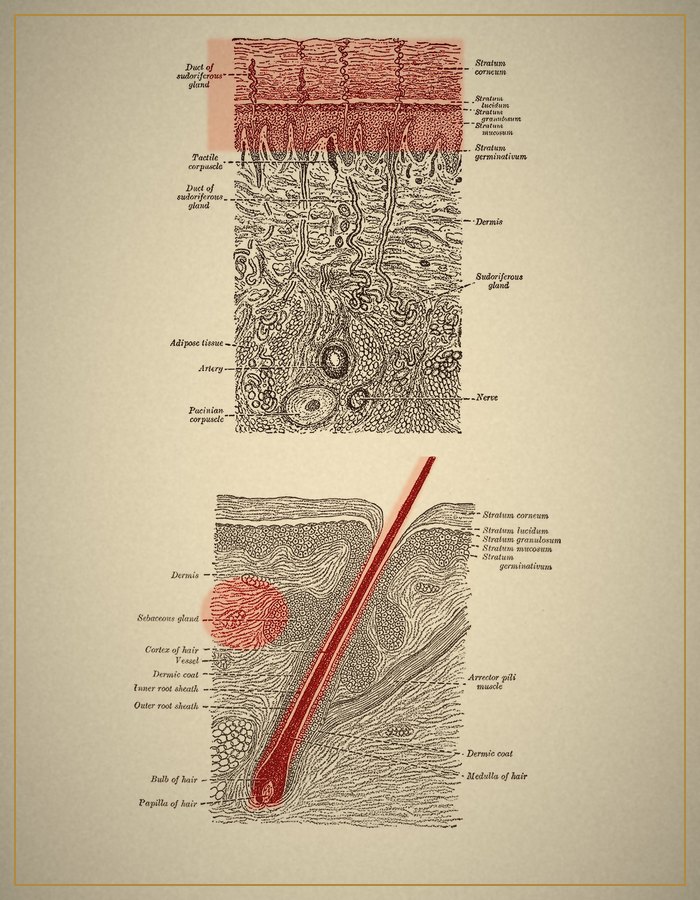
Skin, Hair & Beauty
The rice water rinses, masks and oils behind famous Asian skin and hair.
Here are some of the remedies you will find on this shelf:
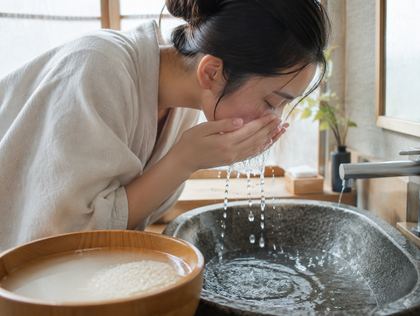
- Rice Water Face Rinse – Dull Skin, Uneven Tone, Dryness P. 232
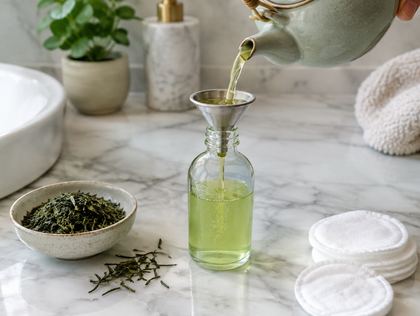
- Green Tea Toner – Oily Skin, Redness, Puffy Eyes, Sun-Tired Skin P. 233
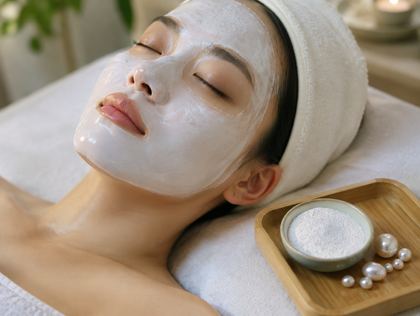
- Pearl Powder Mask – Dull Skin, Uneven Tone, Blemishes P. 234
- Thanaka Paste – Sun Protection (mild), Oily Skin, Cooling, Acne P. 235
- Mung Bean Cucumber Mask – Acne, Redness, Oily Skin, Heat Rash on Face P. 236
- Rice Bran Scrub Bag – Rough Skin, Dull Skin, Gentle Exfoliation P. 237
Eyes, Ears, Mouth & Teeth
For tired eyes, sinuses, gums and toothaches.
Here are some of the remedies you will find on this shelf:
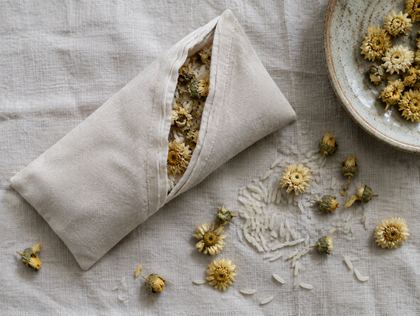
- Warm Rice Eye Pillow – Dry Eyes, Tired Eyes, Screen Strain, Puffy Lids P. 254
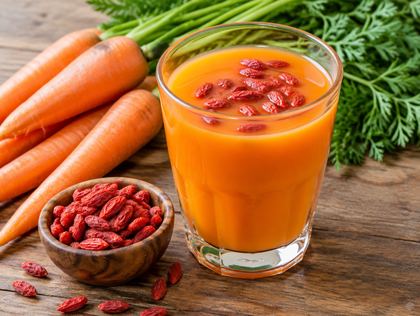
- Goji Carrot Eye Juice – Night Vision, Tired Eyes, Healthy Aging Eyes P. 255
- Chinese Eye Exercises – Eye Strain, Screen Fatigue, Tired, Heavy Eyes P. 256
- Garlic Sweet Potato Leaves – Eye Health, Healthy Aging, Fiber P. 257
- Beating the Heavenly Drum – Ear Ringing, Ear Fullness, Head Fog, Relaxation P. 258
- Salt Water Nasal Rinse – Stuffy Nose, Sinus Pressure, Allergies, Dust P. 259
Detox, Liver & Kidneys
Gentle teas and summer drinks for the liver, kidneys and the morning after.
Here are some of the remedies you will find on this shelf:
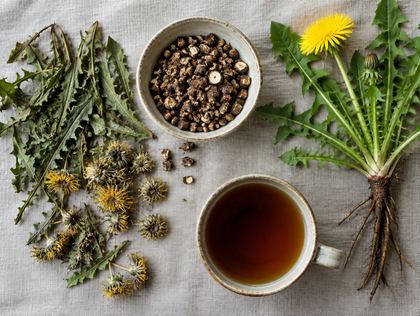
- Dandelion Tea – Sluggish Digestion, Liver Support, Water Retention, Skin Breakouts P. 276
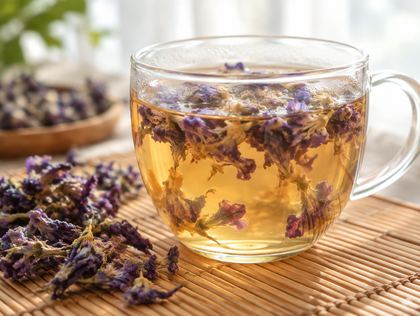
- Kudzu Flower Tea – Hangover, Heavy Head After Drinking, Thirst P. 277
- Yin Chen Liver Tea – Liver Support, Heavy, Sluggish Feeling, Poor Appetite After Rich Food P. 278
- Cat's Whiskers Tea – Kidney Support, Water Retention, Bladder Comfort P. 279
- Barley Water – Bladder Comfort, Hot Weather, Puffiness, Hydration P. 280
- Winter Melon Soup – Puffiness, Water Retention, Hot Summer Days, Light Detox P. 281
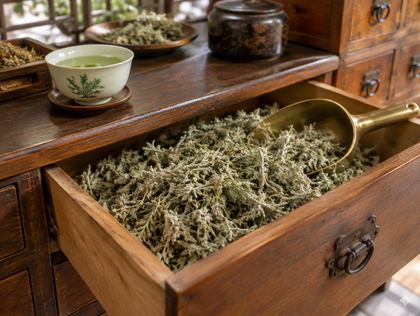
…and these are just 78 of the 250 remedies.
GET MY COPY + BONUSESMeet Sifu Lin
Herbalist. Kung fu master. Keeper of remedies his mother taught him.
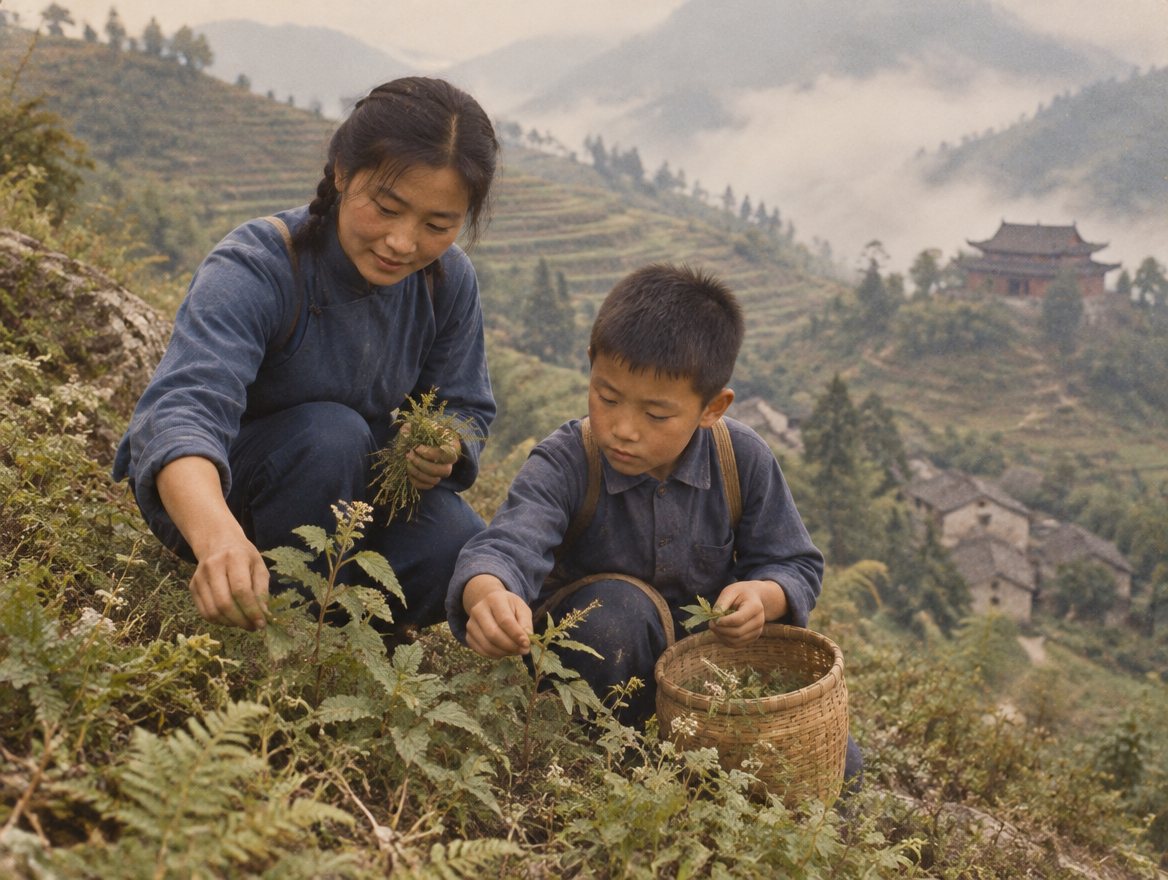
Sifu Lin was born in 1954 in a small village at the foot of the Wudang Mountains in central China, home of ancient Taoist monasteries and some of the oldest kung fu traditions in the world.
His mother was the village herbalist. There was no doctor for a day’s walk, so when someone fell sick, they came to her. By the age of eight, Lin was following her up the misty hillsides with a bamboo basket, learning which plants to gather for a fever, a cough or a sore back.
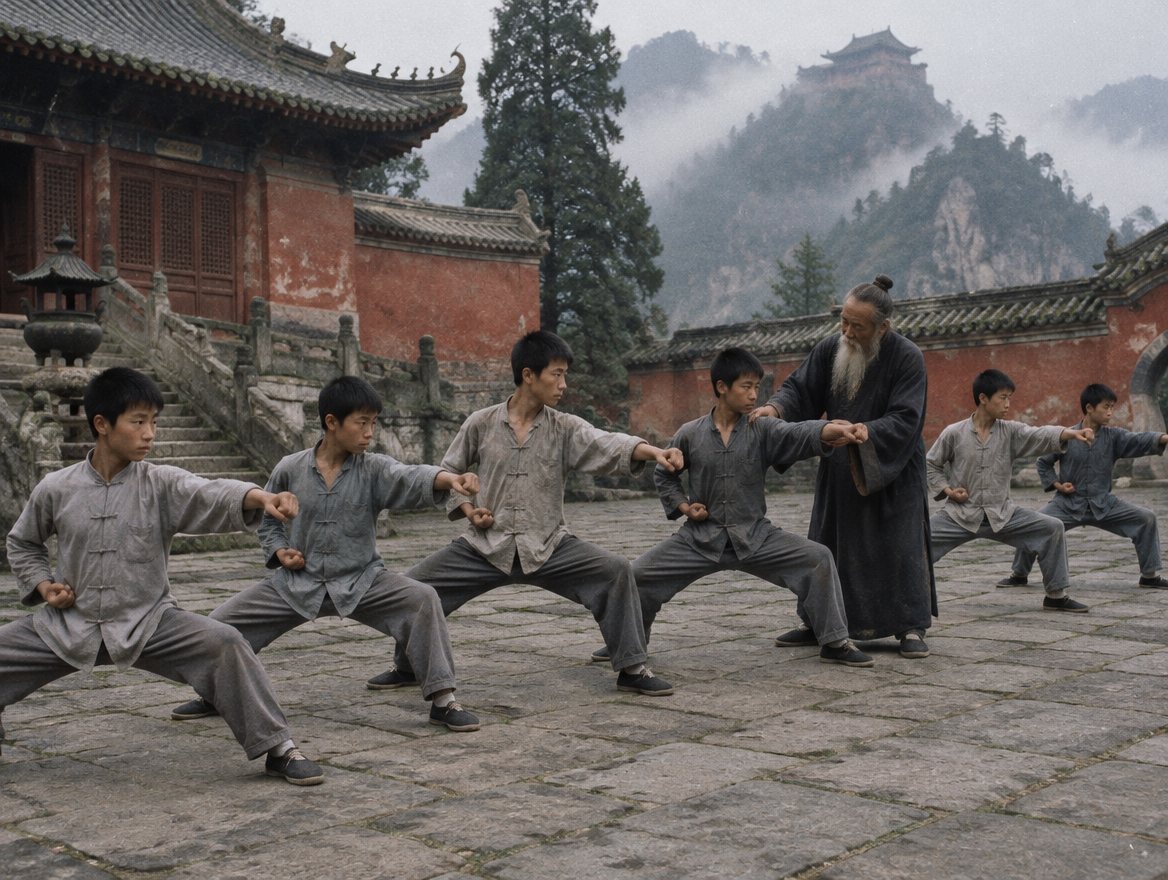
At sixteen, he climbed the stone stairways to the monastery to train in kung fu with the other village boys under a Taoist master.
There, he learned that martial arts and herbal medicine go hand in hand. Every bruise, sprain and strained muscle was treated with liniments, plasters and teas made by hand, many of them the same remedies his mother made at home.
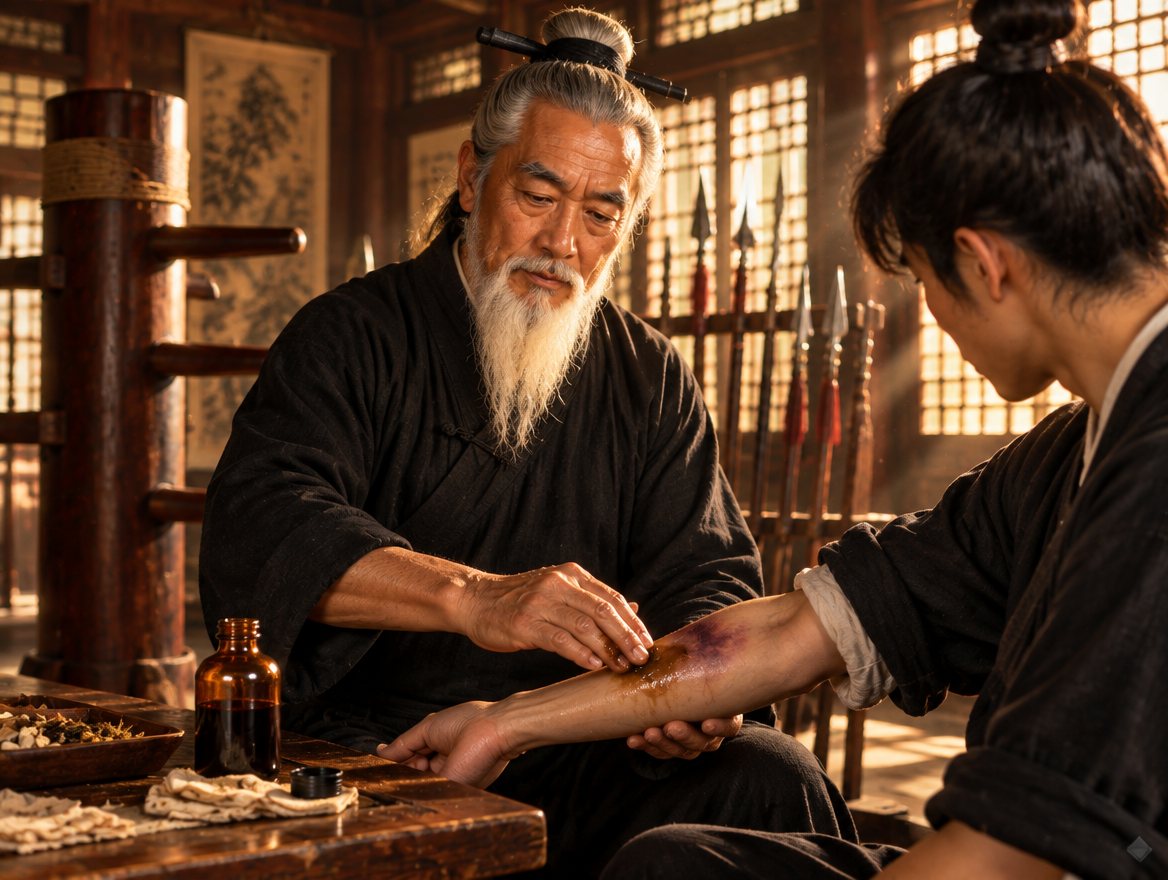
For over fifty years he has taught kung fu and treated his students the old way. When a student takes a hard knock, Sifu Lin reaches for a bottle of dark herbal liniment, not a pill.
You will find those same martial arts remedies, like Dit Da Jow and Tiger-Style Balm, on Shelf One of this book.

Today, at 72, he still trains every morning at dawn on a terrace above the clouds. He moves with the strength and balance of a man half his age.
He credits a lifetime of training, simple food, and the teas and tonics he makes in his own kitchen.
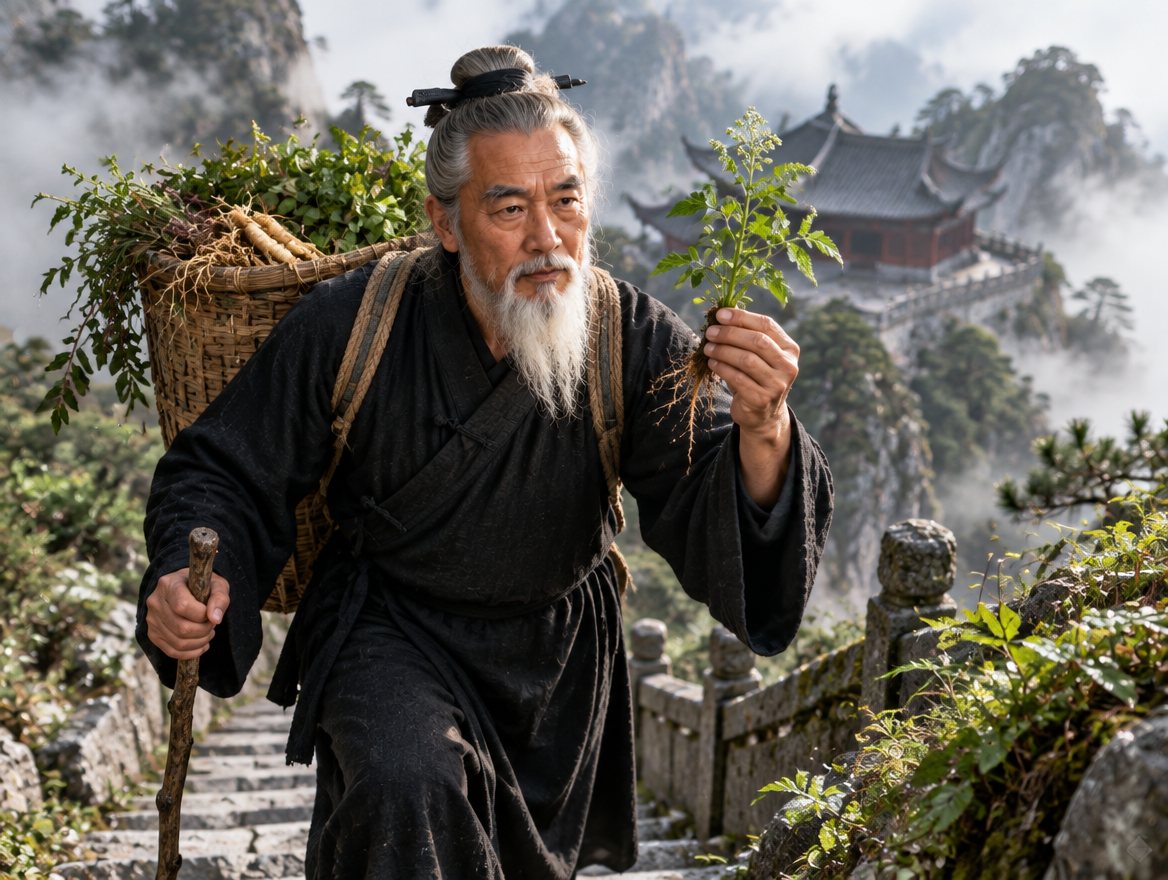
He still gathers many of his own herbs on the mountain paths where his mother first taught him, drying and weighing them by hand.
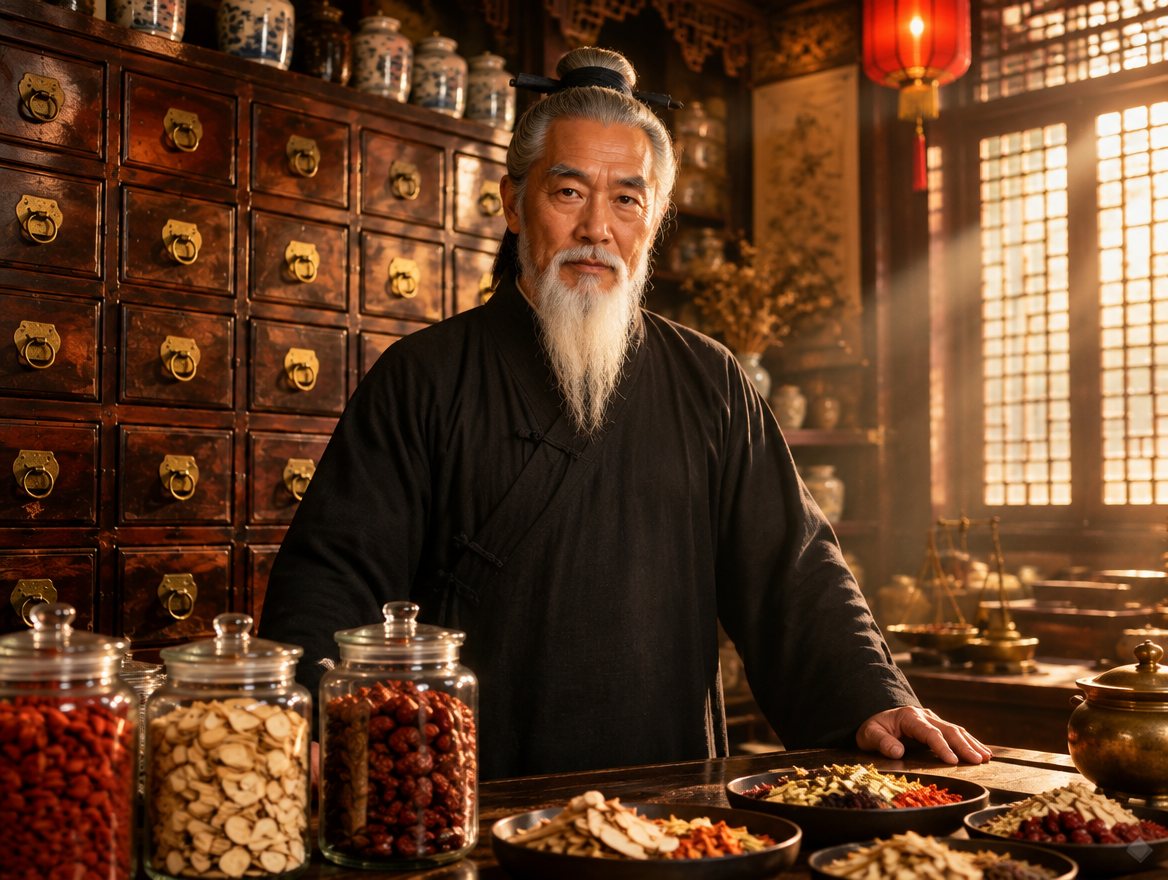
In his small apothecary, villagers and students come to him for cough syrups, sleep teas, warming soups for new mothers and liniments for aching backs.
Almost none of it was ever written down. It lived in his hands and his memory.
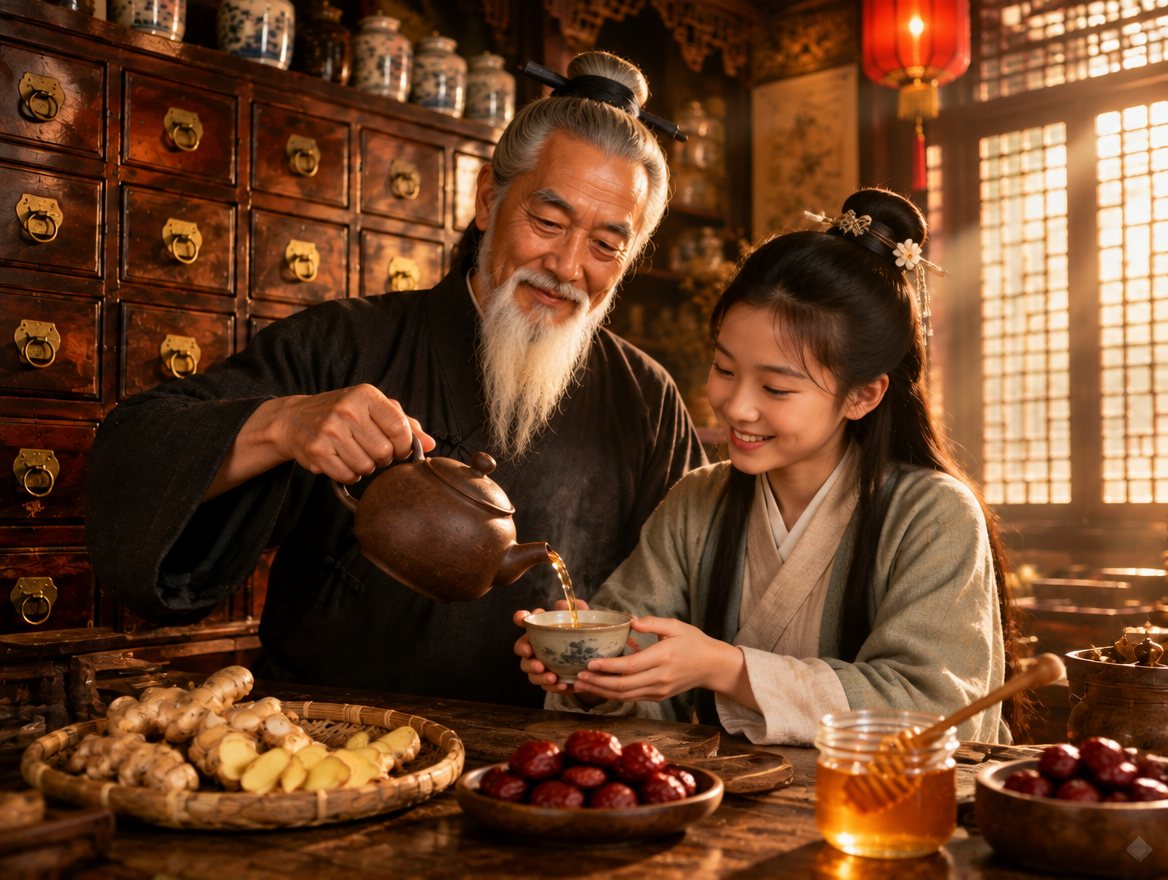
Now he teaches his granddaughter, one cup of ginger tea at a time, the same way his mother taught him.
“The best medicine is the one you make in your own kitchen.”
— SIFU LIN
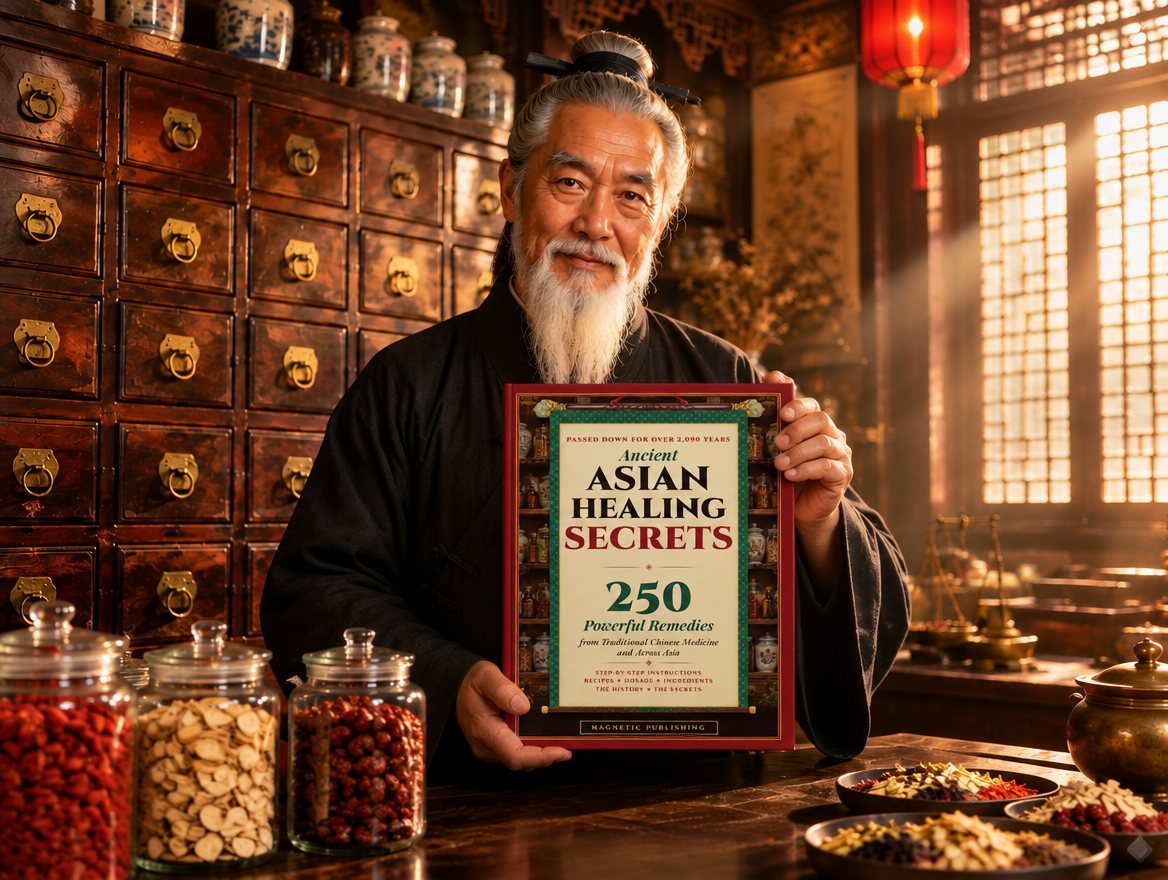
This book is for every family that never had a Sifu Lin. It gathers 250 of the remedies that herbalists like him have made for generations, so they are not lost with the people who remember them.
Sifu Lin is a character inspired by the village herbalists and martial arts masters whose remedies fill this book.
Plus Three Free Gifts When You Order Today
A $87 value, yours free with your book
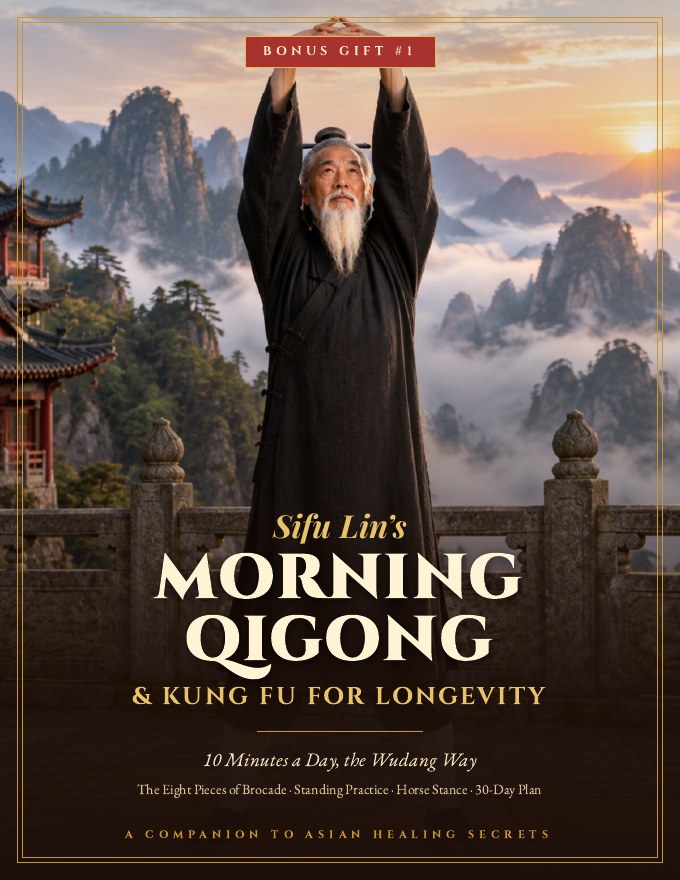
Sifu Lin’s Morning Qigong & Kung Fu for Longevity
The 10-minute morning routine Sifu Lin has practiced since he was sixteen, with a photo for every step: the Eight Pieces of Brocade, Standing Like a Tree, the Horse Stance, a 30-day plan, a practice tracker and his shopping list.
Digital download · 24 pages · Yours FREE today
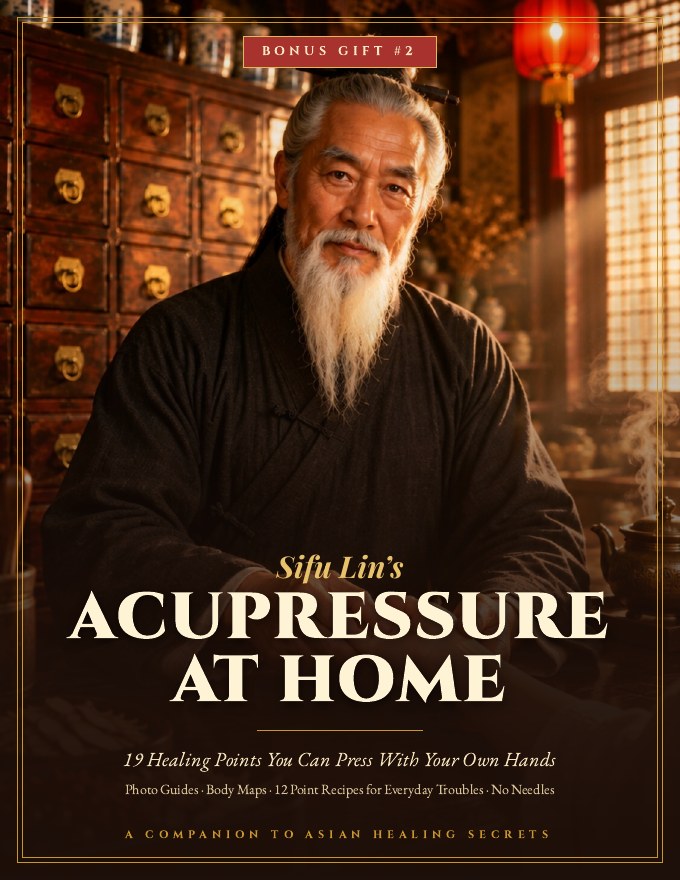
Sifu Lin’s Acupressure at Home
19 healing points you can press with your own hands. Photos show exactly where to press, with full body maps and 12 simple point recipes for headaches, sleep, nausea, period cramps and back ache. No needles.
Digital download · 36 pages · Yours FREE today
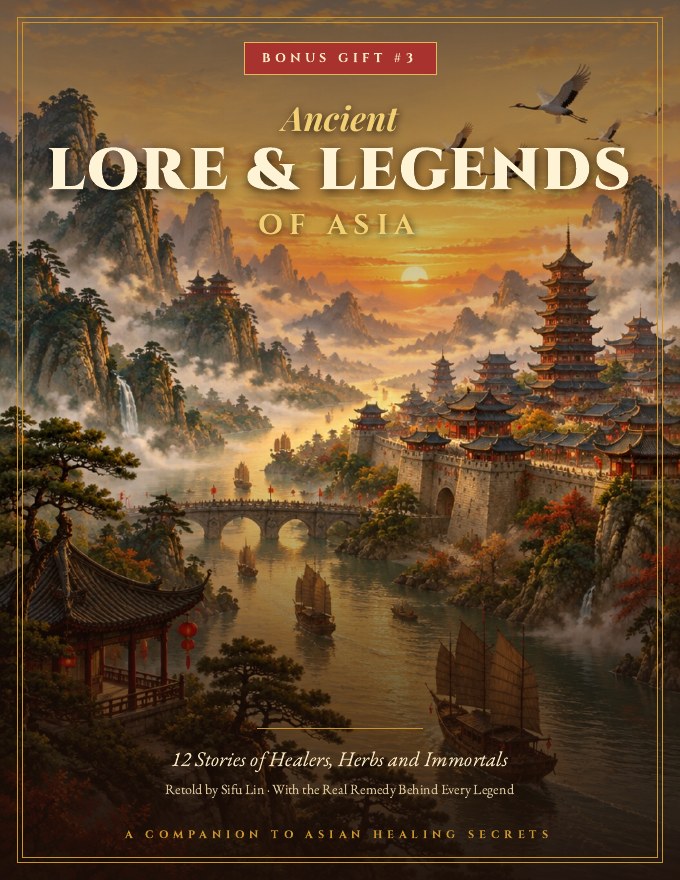
Ancient Lore & Legends of Asia
Twelve legends from China, Korea, Thailand and Japan, from the farmer who discovered tea to the snake who stole the mushroom of immortality. Each one ends with the real remedy behind the legend and where to find it in the book.
Digital download · 40 illustrated pages · Yours FREE today
Brew Your First Remedy Tonight
Most take less than 15 minutes, with ingredients you may already have.
Ancient Asian Healing Secrets + 3 Free Gifts
| Ancient Asian Healing Secrets (298-page full-color book) | $59 |
| Free Gift #1: Morning Qigong & Kung Fu for Longevity | $29 |
| Free Gift #2: Acupressure at Home | $29 |
| Free Gift #3: Ancient Lore & Legends of Asia | $29 |
| Total Value | $146 |
- 250 remedies with step-by-step instructions
- 298 full-color pages, 13 healing shelves
- Real photos of every plant and remedy
- 3 free bonus books, sent to your email right away
- 30-day money-back guarantee

30-Day Money-Back Guarantee
Use the book for 30 days. Make the teas, try the soups, follow the remedies. If you are not happy for any reason, email us for a full refund of the book price.
Why You Should Get Ancient Asian Healing Secrets
Your Own Pharmacy at Home
Most of these remedies cost a few dollars to make and use what is already in your kitchen: ginger, garlic, honey, rice, green tea. With 250 to choose from, you will have something for most everyday problems.
Old Wisdom, Checked Against Modern Science
Each remedy explains what studies have found about it, from honey for coughs to hibiscus tea and blood pressure. You learn not just what to do, but why it works.
Safety First, on Every Page
Each remedy lists drug interactions, pregnancy cautions and the warning signs that mean see a doctor. Some famous Asian herbs that can harm the liver or kidneys were left out on purpose.
A Book to Pass Down
Write your notes on every page, mark the remedies your family loves, and hand it to the next generation, the way these remedies were always meant to travel.
Questions
What format is the book?
A full-color book, 8.5 × 11 inches, 298 pages, available in hardcover and paperback.
Where do I find the ingredients?
Most are in any supermarket. The rest are at Asian grocery stores, Chinese herb shops or online, and the herb glossary lists each one by its English, Latin and local name.
Is this medical advice?
No. The book shares traditional remedies for everyday wellness. It does not replace your doctor. Every page lists who should not use the remedy and when to see a doctor instead.
How do I get the free gifts?
All three bonus books are digital downloads. You get them by email right after you order, so you can start reading while your book ships.